

An email marketing specialist is a digital marketer who plans, builds, and optimizes email campaigns to grow revenue and nurture customer relationships.
Here’s a quick snapshot of what this role involves:
| Area What It Means | |
| What they do | Build and manage email campaigns, segment lists, write copy, and track performance |
| Typical salary | ~$76,000 median in the US (range: $52,500–$75,250+) |
| Job growth | 6% expected through 2034 |
| Key tools | Klaviyo, Mailchimp, HubSpot, Salesforce Marketing Cloud |
| Education | 72% hold a bachelor’s degree; certifications and portfolios also matter |
| Experience needed | Typically 3–5 years with hands-on platform and analytics work |
Email is one of the few marketing channels a business actually owns. No algorithm changes. No ad spend. Just a direct line to your audience.
That makes the specialist behind those campaigns enormously valuable — and the role more complex than most people expect.
There are nearly 250 billion emails sent every day, yet the average open rate across all industries sits at just 21%. Getting above that number takes real skill: smart segmentation, sharp copy, solid automation, and constant testing.
This guide breaks down exactly what email marketing specialists do, what they earn, what tools they use, and how to build or grow this career — whether you’re starting fresh or looking to level up.
Defining the Role: Responsibilities and Business Impact
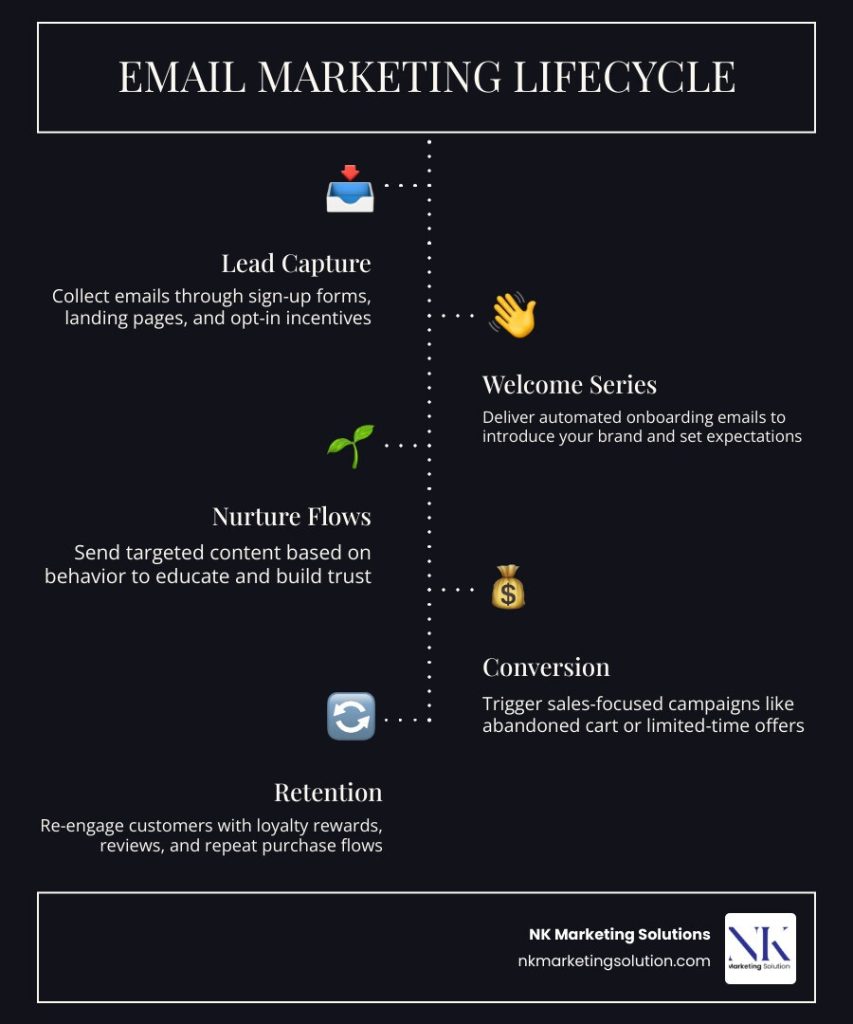
At its core, being an email marketing specialist is about much more than just hitting “send” on a weekly newsletter. We see this role as the architect of a brand’s most personal communication channel. These professionals are responsible for the end-to-end execution of campaigns that guide a stranger into becoming a loyal, lifelong customer.
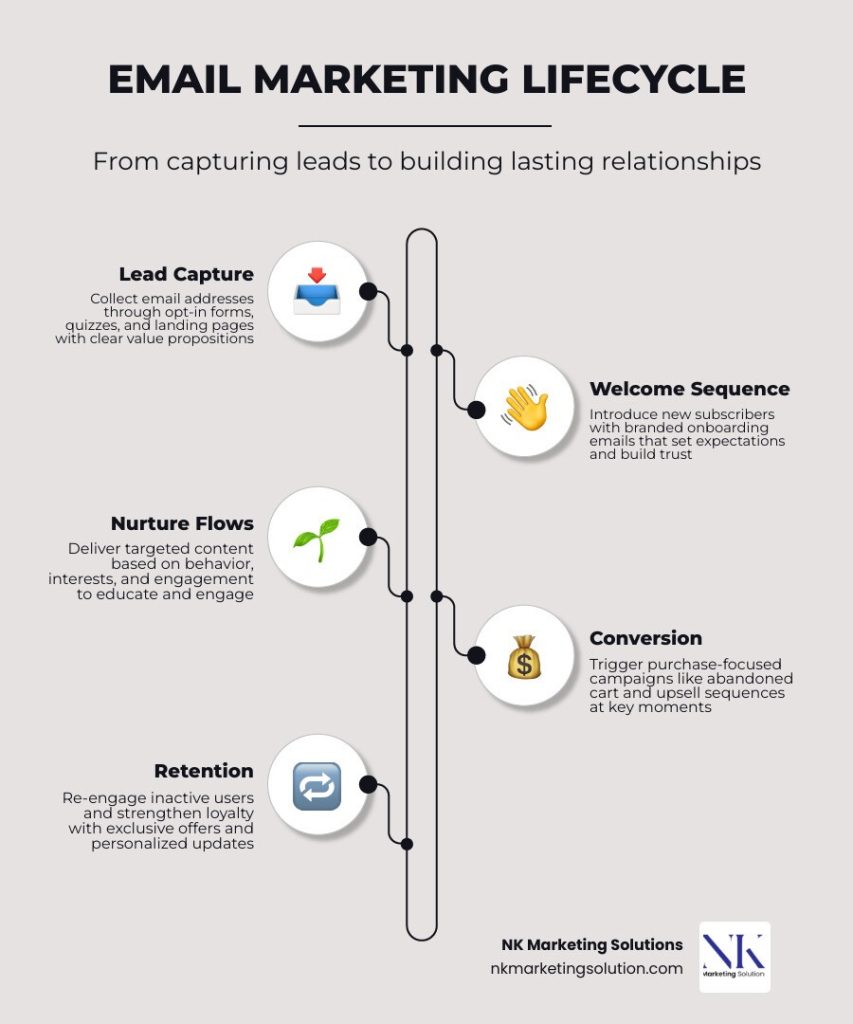
The impact on a business is measurable and direct. While social media provides “likes,” email provides revenue. A specialist ensures that every message sent serves a purpose, whether it’s recovering a lost sale via an abandoned cart flow or educating a new lead through a welcome series.
Primary Responsibilities
The daily life of an email marketing specialist involves a mix of creative and technical tasks. Primary responsibilities include:
- Email Automation: Setting up “evergreen” flows that trigger based on user behavior, such as post-purchase upsells or re-engagement sequences for “ghost” subscribers.
- Template Design: Creating and optimizing email layouts that look beautiful on both a desktop and a smartphone.
- Performance Tracking: Diving into the data to see what worked and what didn’t.
- Quality Assurance (QA): Testing every link, button, and subject line across different email clients (like Gmail vs. Outlook) to ensure a flawless user experience.
- List Management: Regularly “purging” inactive subscribers to keep deliverability high and costs low.
How the Role Differs from General Digital Marketing
While a general digital marketer might dabble in everything from SEO to TikTok, the email marketing specialist is a master of “owned media.” Unlike paid ads, where you pay for every click, email allows us to build a direct relationship with the audience without a middleman.
This role focuses heavily on direct response—getting the user to take a specific action right now. It is also deeply rooted in lifecycle marketing, meaning the specialist thinks about the customer’s journey over months and years, not just a single social media post. For those interested in the technical side of the craft, experts like Courtney Fantinato highlight how the field blends web development logic with marketing strategy.
Essential Skills and Tools for Success
To thrive as an email marketing specialist, one must be a “T-shaped” professional—possessing a broad understanding of marketing with deep technical expertise in email systems. It’s a role that requires you to be a data scientist one hour and a persuasive writer the next.
Essential Technical Skills for an Email Marketing Specialist
Modern email marketing is highly technical. You aren’t just sending text; you are building mini-websites that live in an inbox. Key skills include:
- Automation Flows: Designing complex logic maps (e.g., “If user clicks link A but not link B, send email C”).
- DMARC Monitoring & Deliverability: Understanding the backend “handshakes” between servers to ensure emails don’t end up in the spam folder.
- HTML/CSS for Email: Coding responsive templates that don’t “break” in older versions of Outlook.
- Advanced Segmentation: Moving beyond basic demographics to segment by “intent”—grouping users by how they interact with the brand.
Common Tools and Platforms
Choosing the right “stack” is vital. While small businesses might start with simpler tools, enterprise-level specialists often work with complex ecosystems.
| Platform Best For Key Features | ||
| Klaviyo | E-commerce | Deep Shopify/WooCommerce integration, advanced automation |
| Mailchimp | Small to Mid-sized Businesses | User-friendly interface, great for beginners and content creators |
| HubSpot | B2B & Lead Gen | Full CRM integration, powerful lifecycle tracking |
| Salesforce Marketing Cloud | Enterprise | Massive scale, highly customizable for millions of subscribers |
Beyond the sending platforms (ESPs), specialists use tools like GoHighLevel for CRM-driven automation, Google Postmaster Tools to check domain health, and Litmus or Email on Acid to preview how emails look across hundreds of different devices.
Salary Benchmarks and Job Market Trends for the Email Marketing Specialist
The financial outlook for this career path is strong. As of May 2026, the median total salary for an email marketing specialist in the United States is approximately $76,000. Entry-level roles typically start around $52,500, while senior specialists and managers can easily exceed $75,250 to $100,000+ depending on the complexity of the accounts they manage.
The job market is also expanding, with a 6 percent growth expected through 2034. This is driven by the fact that as privacy laws make third-party tracking (like cookies) harder, businesses are funneling more budget into “first-party data” channels like email.
If you are looking for current openings, you can find a wealth of opportunities on platforms like Indeed Job Listings.
Regional Opportunities and Remote Work
While remote work is incredibly common in this field, there are massive “hubs” for email marketing talent across the country. We see high demand in specific regions:
- California: There is a consistent need for talent in the tech and retail sectors, especially with Email Marketing Specialist Jobs in Los Angeles.
- Texas: The tech migration to the “Silicon Hills” has created many Jobs in Austin, Texas.
- Florida: A growing hub for e-commerce and hospitality marketing, with over 1,000+ Email Marketing Jobs in Florida.
Education and Qualifications
While 72 percent of specialists hold a bachelor’s degree (usually in Marketing, Communications, or Business), the field is becoming increasingly “skills-first.” A strong portfolio showing actual campaign results—like “I increased revenue by 20% through a new welcome flow”—often carries more weight than a degree alone.
Many professionals enter the field through:
- Technical Certifications: Completing courses from HubSpot Academy, Klaviyo, or Salesforce.
- Internship Experience: Getting hands-on experience with real lists and real stakes.
- Portfolio Building: Documenting A/B test results and design samples.
Metrics, ROI, and the AI Revolution
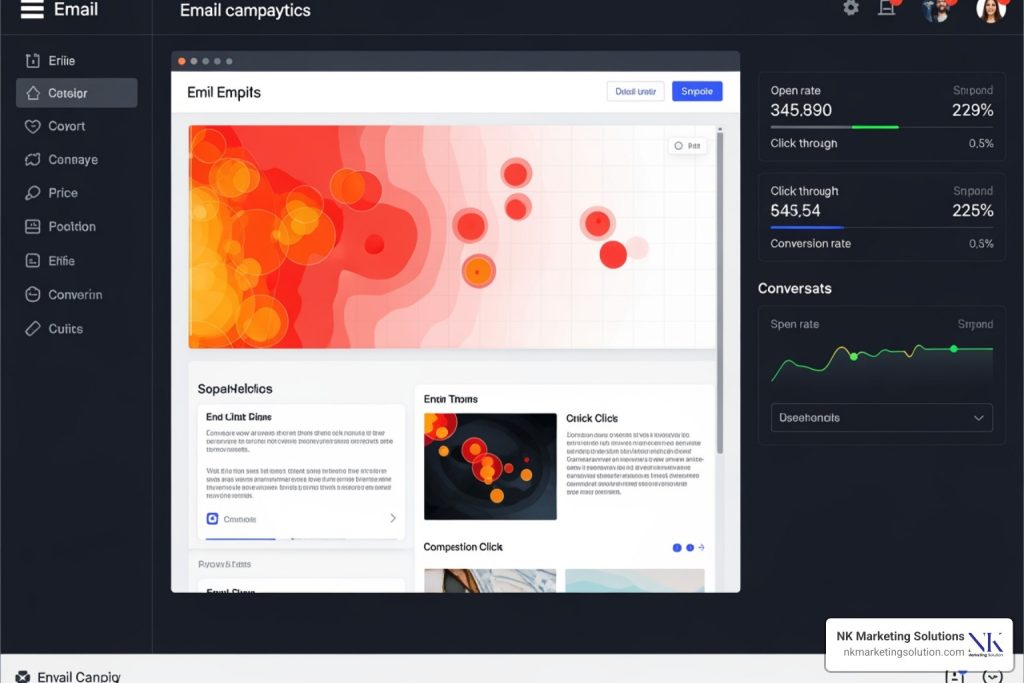
In 2026, we don’t just guess what works; we measure it. An email marketing specialist is obsessed with the “Big Three” metrics: Open Rates, Click-Through Rates (CTR), and, most importantly, Conversion Rates.
How AI is Redefining the Email Marketing Specialist Role
AI hasn’t replaced the specialist; it has given them superpowers. Instead of manually guessing when to send an email, we use predictive analytics to determine the exact minute a specific customer is most likely to open their inbox.
AI tools now handle:
- Send-Time Optimization: Delivering the email at the perfect moment for each individual user.
- Automated Segmentation: Using machine learning to identify patterns in purchase history that a human might miss.
- Personalized Content: Dynamically changing the products shown in an email based on what the user last browsed on the website.
Tracking ROI and Business Growth
The ultimate goal is Return on Investment. We track this by looking at Customer Lifetime Value (LTV) and Revenue per Email (RPE). If a specialist can reduce the unsubscribe rate by even 1% while increasing the RPE, the impact on a company’s bottom line can be worth millions over time.
Career Progression and Growth Opportunities
The path for an email marketing specialist is not a dead end; it’s a gateway. Many specialists move into high-level leadership roles because they understand the data and the customer better than almost anyone else in the building.
Common career jumps include:
- Marketing Manager: Overseeing all digital channels.
- CRM Director: Managing the entire customer relationship database and loyalty programs.
- Freelance Consulting: Many experts, like those found in Email Marketing Jobs in New York, choose to work for themselves, charging $25–$30+ per hour for specialized execution.
Transitioning from Other Fields
You don’t always have to start in marketing. We’ve seen successful transitions from:
- Web Development: Because they already understand HTML/CSS.
- Content Writing: Because they know how to tell a story and write a “hook.”
- Data Analysis: Because they can spot the trends in the spreadsheets that lead to better campaigns.
Frequently Asked Questions
What is the average salary for an email marketing specialist in 2026?
The median salary is currently $76,000. However, specialists with deep expertise in platforms like Salesforce or Klaviyo, and those who can demonstrate a direct link to revenue growth, often earn significantly more.
Do I need a degree to become an email marketing specialist?
While a bachelor’s degree is common (held by 72% of professionals), it is not always a hard requirement. If you have a portfolio of successful campaigns and certifications in major Email Service Providers (ESPs), you can absolutely land a high-paying role.
How is AI changing the daily tasks of email marketers?
AI is taking over the “grunt work”—like manual segmentation and basic copywriting—allowing specialists to focus on high-level strategy, creative direction, and complex system architecture.
Conclusion
The role of the email marketing specialist is one of the most stable and rewarding paths in digital marketing. It combines the thrill of creative writing with the precision of data science. As businesses continue to realize the danger of relying solely on social media algorithms, the demand for experts who can master “owned” communication will only grow.
At NK Marketing Solutions, we believe in the power of these data-driven revenue systems. We provide full-service digital marketing for small businesses, helping them build affordable, high-impact email strategies with zero long-term contracts. Whether you are looking for more info about digital marketing services or you’re ready to start your growth journey, we are here to help you move beyond the send button.