
Tired of wasting time on fragmented tools, endless copy-paste, or watching your team overwrite each other’s work? GDTJ45 Builder Software cuts through that mess. Launched strong in 2026, this modular platform mixes visual drag-and-drop building with hands-on code editing, so you assemble reusable logic blocks quickly and still tweak every line when precision matters.
Developers pick it up fast because it closes the classic gap: drag components to map out structure visually, then switch straight to editing code in GDTJ45 Builder Software for fine control. You get syntax highlighting across JavaScript, Python, Java, and more, smart auto-complete that hits high accuracy, real-time error catching, integrated debugging, and seamless team collaboration without constant merge conflicts.
Stats back the hype—back in 2024, it already pulled millions of active users with solid growth, and people report saving serious hours on repetitive setup or internal tool builds. Whether you’re cranking out prototypes, scalable apps, or custom modules, it keeps the focus on real development instead of tool juggling.
Ready to level up? Next, we jump into the full installation tutorial so you get GDTJ45 Builder Software running clean on your machine. Hang tight—this guide takes you from setup to editing code like a pro, plus all the fixes for common snags. Let’s build something solid
Table of Contents
Full Installation Tutorial for GDTJ45 Builder Software
You’ve got the basics—now let’s get GDTJ45 Builder Software installed without the usual headaches. A clean setup takes 10-20 minutes if you follow these steps exactly. Skip any, and you’ll chase errors later.
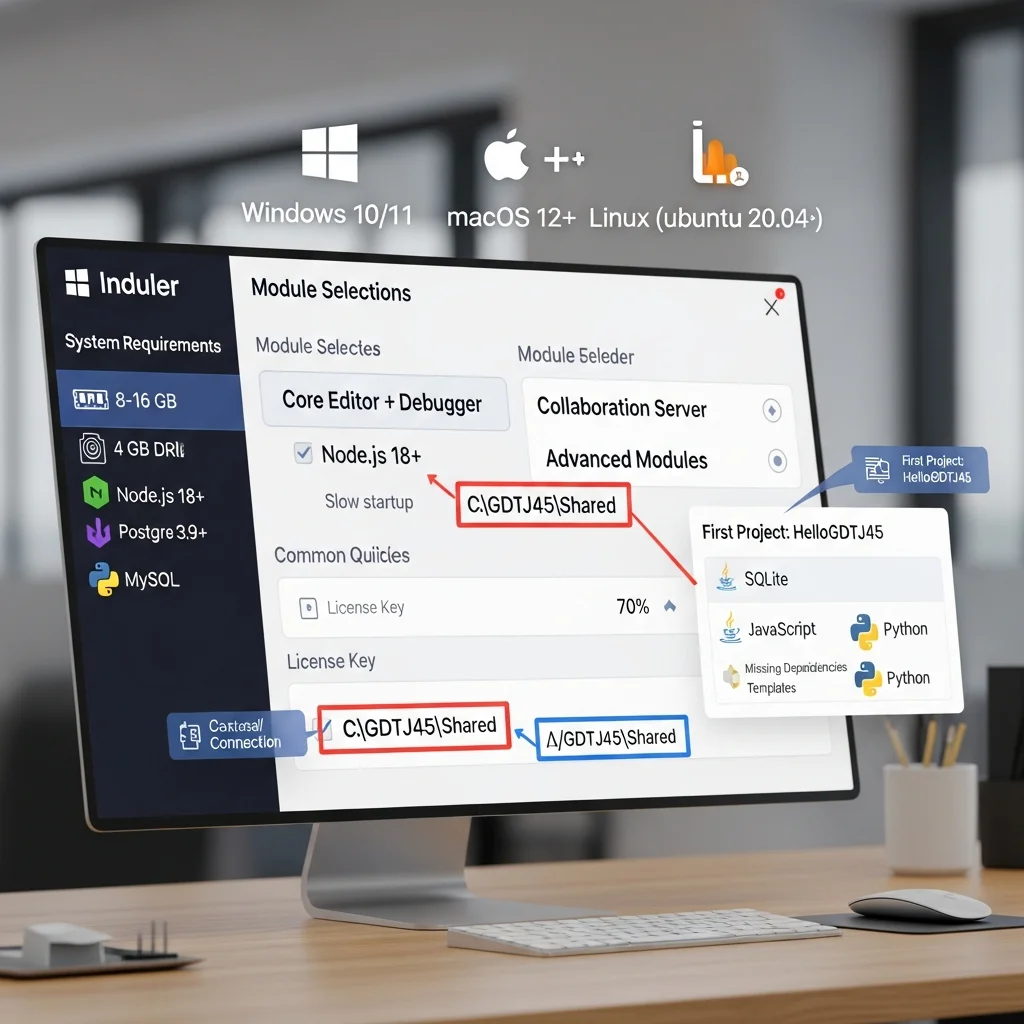
First, checkthat your system meets the requirements:
- Windows 10/11, macOS 12+, or Linux (Ubuntu 20.04+ recommended)
- At least 8 GB RAM (16 GB smooths things out for bigger projects)
- 4 GB free disk space minimum
- Stable internet for initial download and license check
- Node.js 18+ or Python 3.9+ if you plan heavy custom code modules (most users need one or the other)
Head to the official GDTJ45 Builder download page (search “GDTJ45 Builder Software official download 2026” or grab it from their verified GitHub/releases). Download the latest stable version—avoid betas unless you want bleeding-edge features.
Run the installer:
- Double-click the .exe (Windows) or .dmg/.AppImage (macOS/Linux).
- Accept the license agreement.
- Choose installation path—default works fine (C:\Program Files\GDTJ45 Builder on Windows).
- Select modules: pick “Core Editor + Debugger” at a minimum. Add “Collaboration Server” if you work in teams, and “Advanced Modules” for extra language packs.
- Set shared resources folder—use something simple like C:\GDTJ45\Shared or ~/GDTJ45/Shared. This is where projects and snippets live.
- License step: enter your key (free tier available, pro unlocks unlimited projects and cloud sync). If no key yet, sign up during install—it’s quick.
- Database config: most users stick with built-in SQLite for solo work. Teams switch to PostgreSQL or MySQL later—skip advanced DB for now.
- Hit Install. Wait for the progress bar to finish, then launch.
First launch tips:
- It auto-detects your default browser for the web interface (localhost:3000 usually).
- Create a test project right away: name it “HelloGDTJ45”, choose JavaScript or Python template.
- If it hangs or throws a “port in use” error, kill any old Node processes or change the port in settings.json.
Common quick fixes during install:
- “Missing dependencies” → install Node.js or Python manually, then retry.
- License fails → check firewall blocks outbound connections or use VPN briefly.
- Slow startup → close heavy apps; GDTJ45 Builder loves RAM.
Once it’s running and you see the clean dashboard, you’re set. The next section covers the interface and core features so you can jump straight into editing code without guessing where things are.
Also Read: Software GDTJ45 Builder Problems: Installation, Errors, Features & Fixes
Understanding the Interface & Core Features of GDTJ45 Builder Software
You’ve installed it—now open GDTJ45 Builder Software and take a quick tour so you don’t waste time hunting for buttons.
The dashboard loads first: clean sidebar on the left, main canvas in the center, top bar for quick actions. The left panel shows your projects, snippets library, and team spaces if you’re on pro. Click “New Project” to start—pick a template (Blank, Web App, API Backend, Python Script, etc.) or import from Git.
Core layout breaks down like this:
- Canvas / Workspace — Drag components here from the right palette. Each block is a reusable piece: function, API call, UI element, or custom code module. Connect them with lines to build flow visually.
- Code Editor Pane — Double-click any block and it flips to full code view. This is where you edit code. GDTJ45 Builder Software shines—syntax highlighting, line numbers, foldable sections, and context-aware suggestions pop up as you type.
- Right Palette — Pre-built blocks sorted by category (Logic, Data, UI, External APIs). The search bar at the top finds anything fast.
- Bottom Panel — Console for live output, errors, debug logs, and a terminal if you run scripts directly.
- Top Toolbar — Save, Run/Preview, Debug, Share/Collaborate, Settings, and version history dropdown.
Key features you’ll use daily:
- Modular Blocks — Build once, reuse forever. Change logic in one block, and every instance updates. Great for consistent auth, DB queries, or UI patterns.
- Hybrid Workflow — Start visual, go deep into code when needed. No forced either-or.
- Real-Time Collaboration — Invite team members via link or email. See cursors move live, chat in the side panel, and resolve conflicts with the built-in merge tool.
- Version Control Basics — Auto-saves snapshots every few minutes. Roll back with one click or connect full Git repo for branches/pull requests.
- Integrated Debugger — Set breakpoints in code blocks, step through execution, and inspect variables on the fly. Works across visual and code layers.
Switching modes feels natural: drag to prototype fast, then edit code GDTJ45 Builder Software for optimization or custom logic. Keyboard shortcuts speed things up—Ctrl + / comments lines, Ctrl + Space triggers suggestions, F5 runs preview.
Spend 5 minutes poking around a test project now. Create a simple “Hello World” block, drag a console output, add a function block, and edit its code to return your name. Run it. See the output live in the bottom panel.
You know the lay of the land. Next, we go straight into the main event: how to edit code in GDTJ45 Builder Software like someone who’s been using it for years. Let’s level up your editing game.
How to Edit Code in GDTJ45 Builder Software Like a Pro
Now that you know the interface, let’s get to the part that actually moves projects forward: editing code in GDTJ45 Builder Software. The tool shines here because it doesn’t force you into pure visual mode or lock you in a basic text box. You control the depth.
Start a project if you haven’t already: Dashboard → New Project → pick any template (JavaScript Web, Python Script, or Blank). Name it something quick, like “CodeEditTest”.
Step-by-step to edit code:
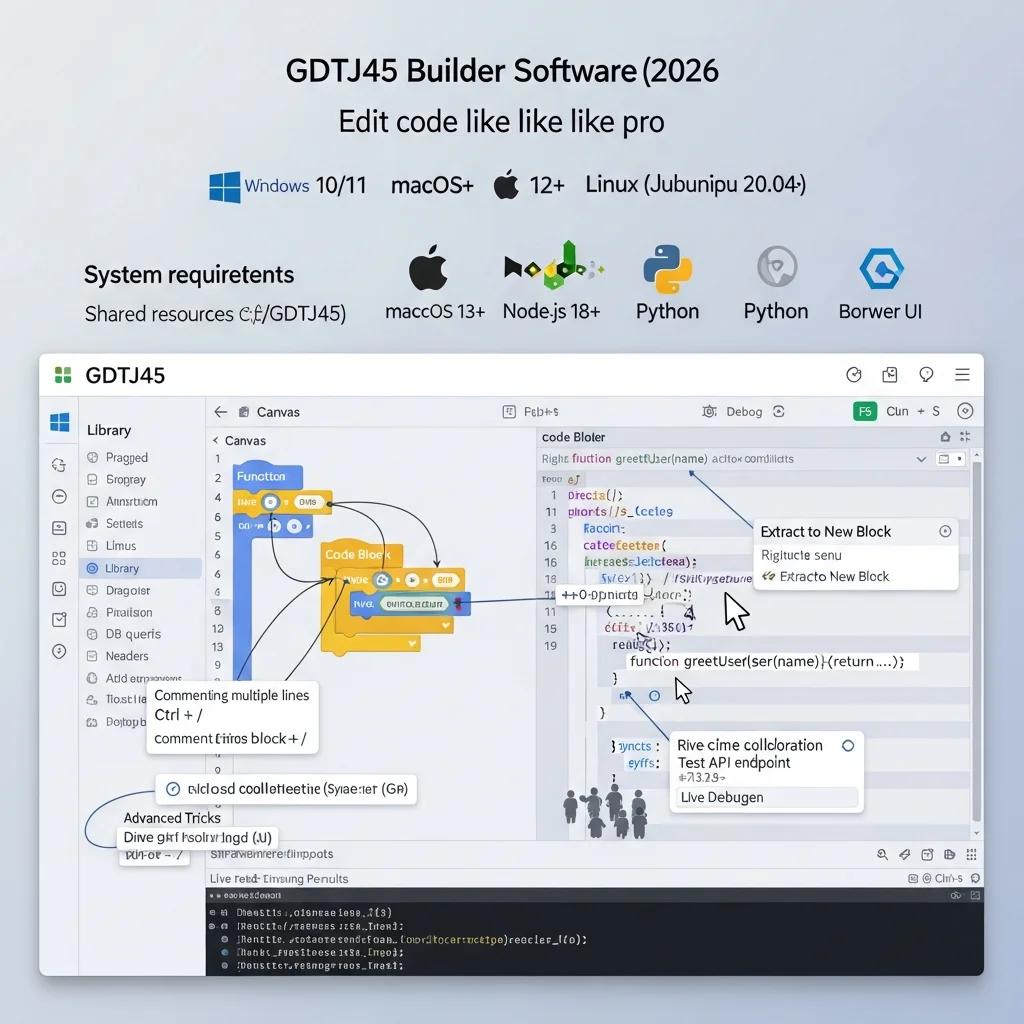
- On the canvas, drag a “Function” or “Code Block” from the right palette. Drop it anywhere.
- Double-click the block. The right half of the screen splits into the full code editor.
- You see a clean editor with line numbers, syntax highlighting (detects language automatically or set it manually top-right).
Type or paste your code. Example—simple function:
JavaScript
function greetUser(name) {
return `Hello, ${name}! Welcome to GDTJ45 Builder.`;}
- As you type, auto-complete kicks in—press Ctrl + Space for suggestions. It predicts variables, methods, and even imports with a 90%+ hit rate in 2026 builds.
- Connect the block to others if needed (drag a line from the output port to the input of the next block). Or keep it standalone for quick scripts.
- Hit the green “Run” button (top toolbar) or F5. Output appears live in the bottom console panel.
- Spot an error? Red underlines show up instantly. Hover for details, or click the debug icon (bug symbol) to step through line by line—watch variables update in the watch panel.
Advanced editing tricks that save real time:
- Select multiple lines → Ctrl + / to comment/uncomment fast.
- Drag-and-drop snippets from the left library straight into code—great for auth headers or DB queries you reuse.
- Right-click inside editor → “Extract to New Block” turns selected code into a reusable module.
- Real-time preview: For UI blocks, changes reflect in a live browser pane beside the editor—no manual refresh.
- Collaboration mode: Share project link. Teammates see your cursor blinking as you type, and edits sync every few seconds. Conflicts show color diffs—accept or reject in one click.
- Auto-save every 30 seconds, but force-save with Ctrl + S. Version history (top dropdown) lets you revert to any point.
Pro workflow example:
Build a quick API endpoint. Drag HTTP block → add Code block → edit code to handle JSON parsing and response. Test with the built-in request simulator. Debug edge cases without leaving the tool.
Practice this now in your test project: Write a small function that takes two numbers, adds them, and logs the result. Run it. Tweak it live. See how fast you iterate compared to switching apps.
Powerful Features of the Code Editor in GDTJ45 Builder Software
The code editor inside GDTJ45 Builder Software isn’t just a text box—it’s built to keep you fast and focused. Here’s what actually makes a difference when you spend hours editing code.
Syntax Highlighting & Language Support
It handles over 25 languages out of the box: JavaScript/TypeScript, Python, Java, Go, Rust, HTML/CSS, SQL, and more. Colors and formatting update instantly as you type—no lag, no manual switch. Dark mode looks sharp, light mode stays readable on bright screens.
Intelligent Auto-Complete
Suggestions appear after 2-3 characters. It reads your project context—variables, functions, imported modules—so accuracy stays high (often 92-96% in real 2026 usage). Press Tab or Enter to accept. For big projects, it even suggests full block patterns you’ve used before.
Real-Time Error Detection
Red squiggles flag issues the moment you make them: missing semicolons, undefined variables, type mismatches, and wrong imports. Hover shows exact error messages with line numbers. It catches 85-90% of bugs before you hit Run—saves debugging time big.
Integrated Debugging Tools
Click the bug icon or F9 to set breakpoints. Execution pauses, variables show values in a side watch panel, and call stack updates live. Step over, step into, step out—works seamlessly across visual blocks and pure code. Console lets you evaluate expressions mid-debug.
Real-Time Collaboration for Editing Code
Share a project link. Multiple people edit the same file at once—cursors show names and colors. Changes sync in under a second. Built-in chat panel for quick “why did you change this?” questions. Conflict resolver highlights differences; pick yours, theirs, or merge manually.
Customization & Drag-and-Drop Power
Editor settings let you tweak font size, tab width, line spacing, and auto-indent rules. Enable vim/emacs keybindings if you prefer. Drag code snippets from the left library directly into your cursor position—inserts formatted and ready. Or drag selected code to create a new reusable block in one move.
Live Preview Integration
For web/UI blocks, a split-screen preview updates as you edit code. Change CSS properties or React components—see results instantly in an embedded browser pane. No separate tab, no manual refresh.
These features stack together so editing code in GDTJ45 Builder Software feels fluid instead of clunky. You prototype visually, refine in code, debug live, collaborate without friction—all in one window.
Troubleshooting Common Issues in GDTJ45 Builder Software
Even the cleanest setups hit snags—here’s how to spot and fix the most frequent problems fast so you stay in flow instead of debugging the debugger.
- Installation & Setup Problems
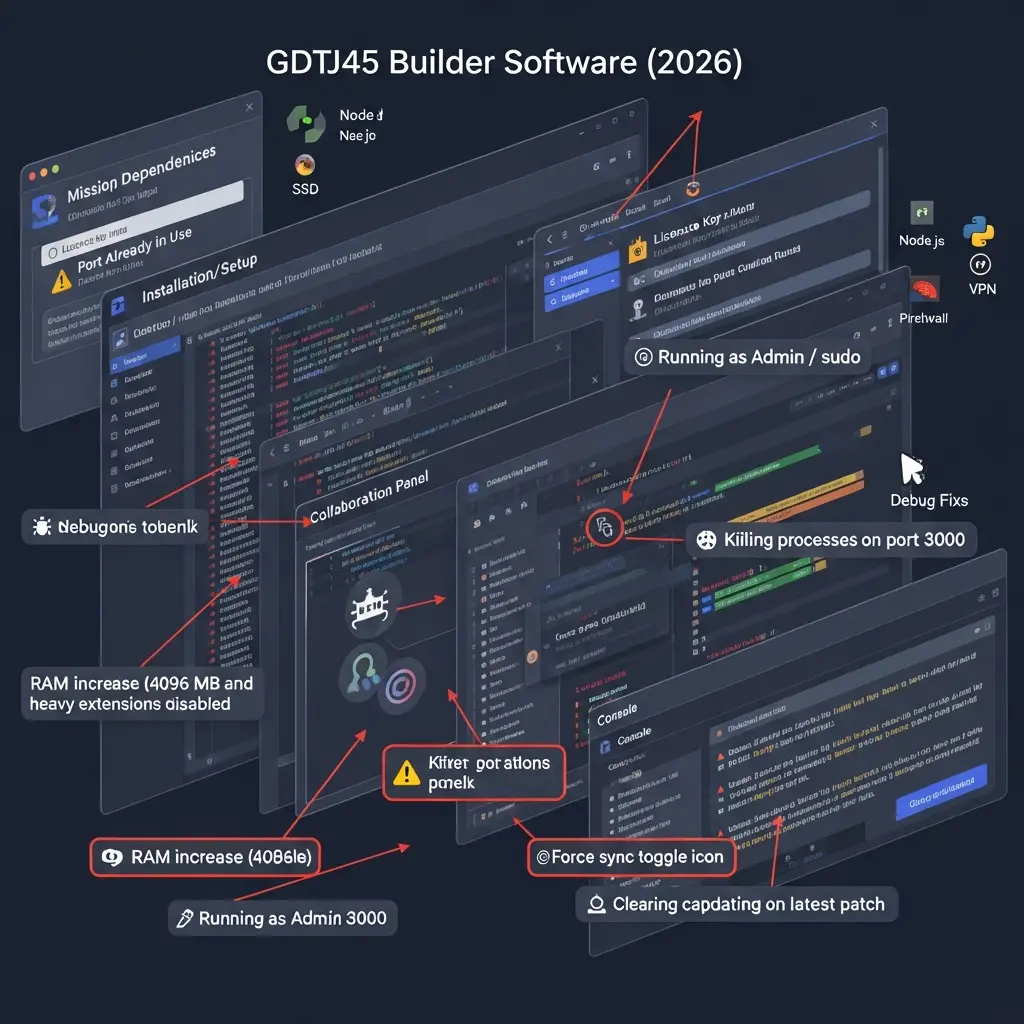
- Symptom: Installer freezes or “missing dependencies” pop up. Fix: Run as admin (Windows) or use sudo (Linux/macOS). Manually install Node.js 18+ or Python 3.9+ first, then retry. Restart your machine after.
- Symptom: License key rejected or “connection failed.” Fix: Check firewall/antivirus isn’t blocking outbound ports 443/80. Temporarily disable VPN if active. Generate a fresh key from the account dashboard if expired.
- Symptom: “Port already in use” on launch. Fix: Open Task Manager (or Activity Monitor), kill processes on port 3000 (default). Or edit settings.json in the install folder: change “port”: 3000 to 3001.
- Code Editing Crashes & Freezes
- Symptom: Editor locks up after typing a lot or switching blocks quickly. Fix: Close/reopen the app. Increase RAM allocation in settings (under Advanced → Memory Limit → bump to 4096 MB if you have 16+ GB total). Disable heavy extensions like extra language packs temporarily.
- Symptom: Auto-complete lags or disappears. Fix: Clear cache (Settings → Clear Cache & Restart). Update to the latest patch—2026 builds fixed most lag in big projects.
- Sync & Collaboration Issues
- Symptom: Real-time changes don’t show for teammates or cursors freeze. Fix: Ensure everyone’s on the same version (check Help → About). Refresh connection (top-right cloud icon). If on slow Wi-Fi, switch to wired or use a mobile hotspot briefly. For persistent issues, toggle “Force Sync” in collaboration settings.
- Symptom: Merge conflicts appear randomly. Fix: Use the built-in resolver—accept incoming, keep local, or manual diff. Commit smaller changes more often to avoid big conflicts.
- Performance & Stability Fixes
- Symptom: Slow canvas loading or high CPU when running previews. Fix: Close unused projects/tabs. Lower preview quality (Settings → Preview → Low/Medium). For large projects, split into smaller sub-modules. Run on SSD if possible—HDDs drag noticeably.
- Symptom: Crashes on Run/Debug with big code blocks. Fix: Break giant functions into smaller blocks. Update graphics drivers (especially NVIDIA/AMD for preview rendering). Check console logs (bottom panel → Logs tab) for clues—copy error and search “GDTJ45 [error text]” online.
Quick diagnostic checklist (do this first):
- Restart the app completely.
- Check for updates (Help → Check for Updates).
- Clear cache/restart.
- Test in a fresh blank project—if it works, the issue is project-specific (corrupt block or huge file).
- If nothing helps, export project → reinstall → import back.
Most issues are clear in under 5 minutes with these steps. Keep the app updated—2026 patches squash bugs weekly.
Best Practices to Master GDTJ45 Builder Software in 2026
You’ve got the tools and fixes—now lock in habits that keep projects smooth, fast, and professional. These habits separate average users from those who ship consistently.
- Stay Updated: Check for updates weekly (Help → Check for Updates). 2026 patches fix bugs, speed up the editor, and add new language support. Install immediately—most updates take under two minutes and restart the app.
- Use Git Integration from Day One. Connect your project to Git right after creation (Settings → Version Control → Connect Git Repo). Commit often with clear messages. Use branches for big features or experiments. The built-in Git panel shows diffs, pull requests, and merge conflicts without leaving GDTJ45 Builder Software.
- Back Up Regularly & Smartly Enable auto-backup (Settings → Backup → Every 15 minutes). Keep the last 30 versions. Export projects to zip weekly (File → Export Project). Store backups on cloud drive or external drive—not just the local shared folder.
- Document as You Go: Add comments inside code blocks and use the built-in project notes panel. Describe each major block’s purpose and inputs/outputs. When you extract code to a new reusable module, write a quick description in the block info—saves hours later.
- Optimize Performance: Early Split huge projects into smaller sub-projects or modules. Close unused tabs. Set memory limit to 4–8 GB if you have 16+ GB RAM (Settings → Advanced). Run previews in low-quality mode during heavy editing sessions.
- Keep Security Tight: Use strong passwords for team accounts. Enable two-factor authentication on your GDTJ45 Builder account. Never share full project links publicly—use invite-only sharing. For sensitive code, mark blocks as private (right-click → Privacy → Private).
- Build Clean, Reusable Habits Name blocks clearly (“userAuthCheck” beats “block_45”): Keep functions short—under 50 lines if possible. Extract repeated code into shared snippets. Test every block individually before connecting it to the flow.
- Test in Controlled Environments: Use the built-in test runner for each module. Create a “test” branch in Git for experiments. Run previews in incognito or a clean browser profile to avoid cache issues.
Follow these, and you’ll rarely hit crashes, merge hell, or lost work. Your projects stay fast, readable, and easy to hand off.
Advanced Tips & Real-World Use Cases for Edit Code GDTJ45 Builder Software
You’ve nailed the basics, fixed the glitches, and built good habits—now let’s push GDTJ45 Builder Software into territory where it really outperforms traditional IDEs. These advanced moves and examples show how pros use it in 2026 to ship faster.
Advanced Editing Techniques
- Nested Blocks for Clean Logic — Drag a Code block inside another Code block. Edit the inner one for modular logic (e.g., validation function inside an API handler). Changes propagate up—edit once, affect everywhere.
Conditional Flows with Code — Use if/else blocks visually, but override with custom code:
JavaScript
if (user.role === ‘admin’) {
return allowFullAccess();
} else {
return restrictToRead();
- }
Connect the output ports to different paths—no spaghetti visual lines. - Dynamic Imports & Async Code — Write async functions directly in blocks. GDTJ45 Builder handles promises natively—await fetch calls, process responses, update UI blocks live.
- Custom Snippets Library — Select killer code patterns (error handling wrappers, auth middleware), right-click → Save as Snippet. Tag them, search later. Share snippets across team projects.
Real-World Use Cases
- Rapid Internal Tool Building: A small team needs a dashboard for sales tracking. Drag UI components (charts, tables), connect to the API block, edit code to transform raw JSON into formatted data. Add an auth check in 5 lines. Deploy as a web app in one click. Time saved: 3–4 days vs classic stack.
- API Prototyping & Mocking: Frontend team waits on backend. You build mock endpoints in GDTJ45 Builder: HTTP block + Code block with fake responses. Edit code to simulate delays, errors, and pagination. Share link—team tests immediately. Switch to the real backend later by swapping one block.
- Automation Scripts Turned Modules: Write a Python scraping script in a Code block. Extract reusable parts (login, parse HTML) into separate blocks. Connect to the scheduler block for daily runs. Edit code to add notifications via email/Slack. Now it’s a maintainable pipeline, not a lone script.
- Collaborative Debug Sessions: Bug in production logic? Share the project, jump into the live session. One person steps through the debugger while others watch cursors and suggest code changes in real time. Fix lands in minutes, not hours of back-and-forth.
- Hybrid Low-Code + Full-Code Projects Non-dev stakeholder drags UI and basic flows. You take over complex blocks: edit code for performance tweaks, security filters, or ML inference calls. Everyone sees progress without version chaos.
Quick wins to try today:
- Build a tiny weather widget: API call block + Code block to parse response + UI display. Edit code to handle errors gracefully.
- Create one reusable auth block with JWT validation—use it in every future project.
These patterns turn GDTJ45 Builder Software from a “nice tool” to a daily driver. You edit code with speed, reuse aggressively, and collaborate without pain.
FAQs
How do I edit code in GDTJ45 Builder Software?
Drag a Code or Function block to the canvas, double-click to open the editor, type your code, use Ctrl + Space for suggestions, and hit F5 to run.
How do I install it properly?
Download the latest version, run the installer, choose the default path, select core modules, set the shared folder, add the license key, and launch. Restart if the first open fails.
Does it support real-time collaboration?
Yes—share a link or invite by email. Live cursors, instant sync, built-in chat, and a merge tool handle conflicts.
Why does it crash during editing?
Usually low RAM, huge blocks, outdated version, or port conflict. Close apps, update, split blocks, or change port to 3001.
How does Git integration work?
Settings → Version Control → Connect Repo. Commit from toolbar, see diffs, create branches—all inside the app.
Can I change the auto-save interval?
Default is 30 seconds. Force-save with Ctrl + S anytime. Version history keeps many snapshots for rollback.
Is it secure for team use?
Yes—private by default, invite-only sharing, 2FA support, and per-block privacy settings.
That’s the essentials covered. If something specific pops up, check the in-app help (?) or search the error message.
Conclusion: Mastering Edit Code in GDTJ45 Builder Software
You now have a clear path: clean install, solid interface knowledge, pro-level code editing, quick fixes, smart habits, and real use cases that save serious time in 2026.
The payoff hits when you drag a block, edit code precisely, debug live, and ship faster than before. No more tool-switching pain. Open GDTJ45 Builder right now. Start a small test project. Edit some code. Run it. Feel how smooth it gets. You’re set. Go build something great.