
In 2026, one question still keeps business owners and marketers up at night: How long does SEO actually take to show results? It’s frustrating to spend hours creating content, fixing technical issues, and building backlinks, only to see minimal traffic or slow ranking improvements. You might watch competitors dominate search results while wondering why your site isn’t moving, or feel unsure if your SEO investment is really paying off. The reality is that SEO today is far more complex than just keywords; it’s driven by AI, user intent, and search engine algorithms that reward fast-loading pages, structured content, local relevance, and helpful answers. Understanding the realistic timeline for SEO results, knowing what affects it, and learning how to accelerate growth is crucial for any business that wants to succeed online.
In this guide, we’ll break down the timelines for new and existing websites, local and competitive keywords, and modern SEO factors like AEO, GEO, and AI-driven search trends, so you can set the right expectations, avoid common pitfalls, and start seeing measurable results faster.
Schedule a free SEO audit with NK Marketing Solutions today and discover a step-by-step plan to boost your rankings and traffic in 2026.
Table of Contents
Why Every Business Asks About SEO Timelines
Every business wants results fast. That’s why the question of how long SEO takes is one of the most common concerns we hear from website owners, marketers, and entrepreneurs in 2026. The reality is simple: SEO isn’t like running a paid ad where you see instant clicks the moment you launch a campaign. Instead, it’s a slow-building, compounding process.
Businesses ask about SEO timelines because they face real frustrations:
- Traffic seems stuck: You optimize your pages, publish new content, and fix technical issues, but visitors don’t appear overnight.
- Competitors are ahead: While you’re waiting for results, other websites climb the search rankings, making it feel like you’re constantly behind.
- Investment uncertainty SEO requires time, effort, and money. Without visible progress, it’s hard to know if your strategy is working or if resources are being wasted.
- Changing algorithms and trends: Search engines in 2026 are smarter than ever. AI-driven updates, zero-click searches, and evolving ranking factors mean what worked last year may not work today.
These challenges make businesses anxious, but they also highlight a critical truth: understanding the SEO timeline is just as important as executing the strategy itself. Knowing what to expect helps you set realistic goals, avoid common mistakes, and plan a sustainable growth path.
In this guide, we’ll dive into exact timelines for different types of websites, explain the factors that control how fast your SEO works, and provide strategies to accelerate results without cutting corners. Whether you’re a brand-new site or an established business, you’ll learn why SEO timelines vary and how to take control of your growth.
What Has Changed in 2026?
SEO in 2026 looks very different from even just a few years ago. Search engines have evolved beyond simple keyword matching; they now focus on intent, relevance, and user experience. Artificial intelligence (AI) plays a major role in understanding content and ranking pages, which means your website must be optimized not just for words, but for how people ask questions, what answers they expect, and how quickly they can get value.
Another big shift is Answer Engine Optimization (AEO). Instead of only competing for traditional search results, websites now aim to appear in featured snippets, voice search responses, and AI-powered summaries. This changes how content should be structured. Short, clear answers, lists, tables, and structured data are now more important than ever.
Local relevance has also grown in importance. Geo-targeted strategies mean your business can appear prominently in maps, location-based searches, and hyper-specific queries. Even websites with strong domains can lose visibility if they ignore regional preferences, user behavior, and local search signals.
Finally, speed and technical performance matter more than ever. Page load times, mobile responsiveness, Core Web Vitals, and structured data directly impact rankings in 2026. A slow or poorly optimized site can dramatically delay results, no matter how good your content is
What are the SEO Results Timeline in 2026?
Understanding SEO timelines in 2026 isn’t straightforward because no two websites are the same. The speed at which your pages start ranking depends on many factors, including site age, content quality, competition level, and technical setup. Unlike quick fixes like paid ads, SEO grows gradually. Results compound over time, meaning the longer you invest in the right strategies, the stronger your visibility becomes.
For a new website, you might see early signs of traffic within the first few months, but meaningful growth usually takes six months or more. Established sites with existing authority may notice improvements much faster, especially if technical issues are resolved and content is refreshed. High-competition niches naturally take longer to move the needle, while smaller, low-competition topics can show measurable results in weeks.
Modern SEO in 2026 also includes AI-driven ranking factors and answer engine optimization. Search engines now prioritize pages that provide clear answers, structured information, and an excellent user experience. This means even well-written content may take longer to rank if it isn’t aligned with AI evaluation criteria, local relevance signals, or user intent.
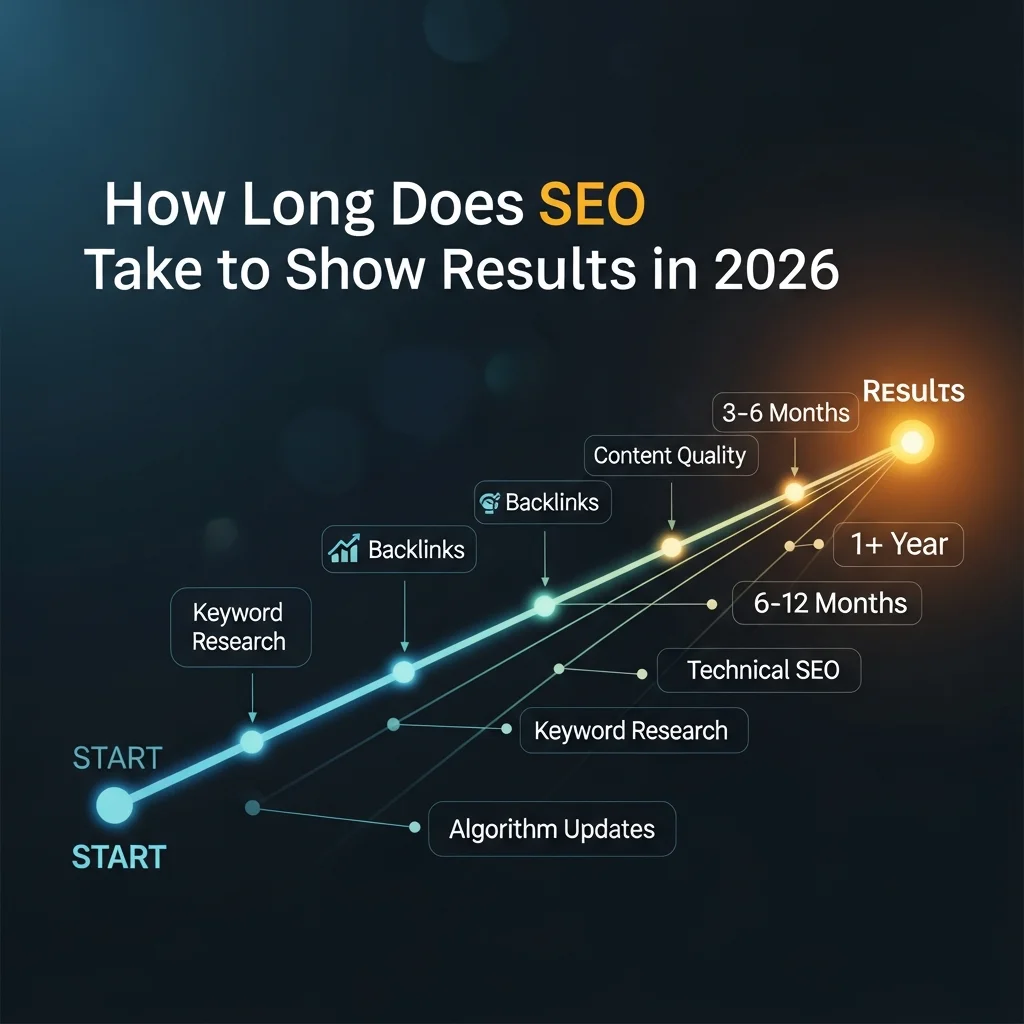
Ultimately, the SEO timeline isn’t fixed. While some businesses see noticeable progress in 3–4 months, others may need 6–12 months of consistent effort before major traffic and ranking gains appear. Understanding these nuances helps set realistic expectations and allows you to plan a strategy that balances patience with actionable improvements.
Typical SEO Timeframes
While every website is unique, there are common stages most sites experience when pursuing SEO in 2026. Understanding these phases can help you set realistic expectations and track progress effectively:
1–2 Months: Foundation and Indexing
In the first few weeks, your focus should be on setting up a solid SEO foundation. This includes fixing technical issues, optimizing site structure, submitting sitemaps, and ensuring fast-loading pages. Search engines begin crawling and indexing your content, but you won’t see significant traffic just yet. Think of this period as laying the groundwork for future growth.
3–4 Months: First Signs of Movement
By month three or four, your site may start appearing for some long-tail or low-competition keywords. You might notice slight increases in organic traffic and improved visibility in search results. This stage reflects the AI and AEO impact search engines are beginning to evaluate your content’s quality, relevance, and structured data.
5–6 Months: Meaningful Growth
Around the six-month mark, SEO efforts often start paying off visibly. Your website may rank for more competitive keywords, user engagement improves, and traffic starts to rise steadily. By now, your content clusters, backlinks, and technical improvements begin compounding.
7–12 Months: Compounding Results
After half a year to a year, most well-optimized websites experience significant gains in organic traffic and keyword rankings. The site has built authority, search engines recognize your consistency, and improvements in user experience, Core Web Vitals, and AEO compliance accelerate growth. This stage is when SEO truly becomes a long-term asset, delivering sustained visibility and leads.
Key Takeaways:
- SEO is gradual, not instant; quick spikes are rare outside low-competition niches.
- Early results often focus on low-competition or localized keywords before broader national or competitive terms.
- Consistency and alignment with modern search factors like AI evaluation, structured content, and local relevance are what speed up timelines.
Modern Factors: SEO + AEO + GEO
In 2026, SEO is no longer just about stuffing keywords or building backlinks. Success depends on how well your site aligns with modern ranking factors, including AI-driven evaluations (AIO), Answer Engine Optimization (AEO), and geo-targeting (GEO). Understanding these can make a huge difference in how quickly your site shows results.
1. AI-Driven SEO (AIO)
Search engines now rely heavily on artificial intelligence to determine which pages best satisfy user intent. AI evaluates content for quality, relevance, readability, and comprehensiveness. Even if your website has great content, failing to meet AI expectations can delay rankings. Optimizing for AI means structuring content logically, using semantic keywords, and making your site easy for both users and machines to understand.
2. Answer Engine Optimization (AEO)
AEO focuses on position zero results, featured snippets, and voice search answers. In 2026, users will increasingly search for quick, precise answers rather than browsing multiple pages. Structuring your content with questions, bullet points, tables, and summaries helps your pages appear in these high-visibility spots, giving early traffic boosts even before traditional rankings improve.
3. Geo-Targeting (GEO)
For businesses serving specific locations, geo-targeting is critical. Google and other search engines prioritize pages that match user location, search intent, and local signals like Google My Business listings, local citations, and reviews. Incorporating location-specific keywords and content accelerates results in local search, often faster than broader, national SEO efforts.
Why These Factors Matter for Timelines
Ignoring AI, AEO, or GEO can stretch your SEO timeline, while integrating them strategically can shorten the path to meaningful results. A new website using these strategies may see measurable traffic in a few months instead of six, while an existing site ignoring them could lag behind competitors.
Takeaway: Modern SEO in 2026 is multi-layered. Combining traditional SEO best practices with AI optimization, answer-focused content, and location relevance ensures faster, more reliable results.
Realistic SEO Results Timeline by Starting Point
Not all websites progress at the same speed. Your starting point plays a huge role in how quickly SEO delivers measurable results. Understanding where your site fits helps you set realistic expectations and plan effective strategies.
1. Brand New Website
A brand-new website starts with zero authority, no backlinks, and limited content. In 2026, even with perfect optimization, it usually takes 6–12 months to see significant traffic growth. Early wins often come from long-tail, low-competition keywords, structured content, and local search visibility. Patience and consistent effort are crucial here.
2. Existing Website with No SEO
Sites that have been online but never had SEO can see results faster than brand-new websites, often within 3–6 months. They already have indexed pages and some user signals, but optimization is required. Fixing technical issues, improving content, and adding structured data can quickly boost rankings, especially for localized or niche keywords.
3. Existing Website with Some SEO History
Websites that have previous SEO work may see results faster, sometimes in 2–4 months. However, outdated strategies, low-quality backlinks, or thin content can hold progress back. In 2026, updating content for AI-readability, AEO compliance, and user intent can accelerate rankings and traffic.
4. Established Website with Strong Domain
Websites with a well-established domain, high authority, and consistent content can often experience results in as little as 1–3 months when implementing modern SEO improvements. These sites benefit from existing trust signals, backlinks, and search engine familiarity, making AI-driven ranking improvements and geo-targeted strategies highly effective.
Key Takeaways
- The older and stronger the domain, the faster results appear, assuming modern SEO standards are met.
- Brand-new sites need longer timelines, but consistent work pays off with compounding traffic over time.
- Updating content for AI, answers, and geo-relevance accelerates results across all website types.
Competitive National Keywords
Ranking for high-competition, national-level keywords is one of the toughest challenges in SEO. These are terms that thousands of websites target, often with high domain authority, strong backlinks, and long-standing content. In 2026, achieving visibility for these keywords requires more time, strategy, and consistency than local or niche terms.
For new or mid-sized websites, it can take 9–12 months—or even longer—to see meaningful traffic from competitive national keywords. This timeline depends on several factors:
- Content depth and authority: Your content must provide more value, clarity, and relevance than established competitors.
- Backlink quality and volume: Earning links from authoritative, relevant websites is essential for building trust.
- Technical performance Search engines increasingly favor sites with fast loading times, structured data, and mobile optimization.
- AI & AEO optimization: Modern algorithms reward content that answers questions clearly and satisfies user intent, including featured snippets and voice search compatibility.
Even for established websites, ranking for competitive national keywords isn’t instant. The difference is that strong domains with a history of quality content can gain traction in 4–6 months, while smaller sites may need a full year of consistent effort.
Tip for 2026: Focus on content clusters and topic authority. Instead of targeting a single keyword, create a network of related content that signals expertise to search engines. This approach not only shortens the timeline for competitive terms but also improves visibility across multiple queries.
Key Takeaways:
- Competitive national SEO is a long-term game.
- Patience, quality content, and strategic backlinking are non-negotiable.
- Leveraging AI-friendly content, structured data, and topical authority accelerates results in a modern SEO environment.
Local SEO Mid-Competition Market
For businesses targeting a specific region or city, local SEO can deliver faster results than national-level SEO, even in moderately competitive markets. In 2026, search engines prioritize relevant local results, meaning businesses that optimize for location-specific searches often see measurable improvements within 2–4 months.
Key factors that influence local SEO timelines include:
- Google Business Profile Optimization: Ensuring your profile is fully updated with accurate contact information, hours, services, and images.
- Local Keywords & Content: Using keywords that include city or neighborhood names, combined with helpful, answer-focused content, improves visibility for local searches.
- Citations & Reviews: Consistent listings on local directories and positive reviews signal trust to search engines.
- Geo-Targeted Structured Data: Adding schema markup helps search engines understand your location and services, boosting chances for featured snippets and map packs.
Unlike competitive national keywords, local SEO allows smaller businesses to gain traction quickly, especially if competitors aren’t fully optimized. For example, a small café, clinic, or boutique store can start appearing in maps and local search results in just a few months when all local factors are implemented correctly.
Pro Tip for 2026: Combine local SEO with AEO strategies. Answer common local questions—like “best pizza near me” or “affordable dental clinic in [city]”—to capture zero-click searches and voice search traffic. This approach accelerates results and builds authority in your area faster.
Key Takeaways:
- Local SEO timelines are shorter than national SEO, but still require consistent effort.
- Accurate profiles, geo-targeted content, and structured data are essential for faster results.
- Combining local relevance with AI-friendly content maximizes traffic and conversions.
Long-Tail Low Competition Keywords
Not every SEO strategy needs to focus on high-competition terms. Long-tail, low-competition keywords are specific search phrases that usually get less traffic individually but are easier to rank for and highly targeted. In 2026, these keywords are perfect for businesses looking to gain early wins and measurable results quickly.
Why They Work
- Faster Results: Since fewer websites target these phrases, your content can rank in weeks rather than months.
- Higher Conversion Potential: Long-tail searches often indicate strong user intent, like “affordable running shoes for beginners” rather than just “shoes.” Visitors are more likely to take action, making traffic more valuable.
- Supports Broader SEO Goals: Ranking for multiple long-tail terms builds topical authority, which eventually helps with higher-competition keywords.
How to Use Them in 2026
- Content Clusters: Group multiple long-tail phrases around a main topic to create comprehensive content hubs.
- AEO-Friendly Answers: Write concise answers to common questions your audience searches for, improving chances of featured snippets and voice search visibility.
- Geo Integration: For local businesses, combine long-tail keywords with location terms to dominate hyper-local searches quickly.
Timeline Expectations
For low-competition long-tail keywords, you can often see traffic improvements in 1–3 months, even for new websites. When used strategically, they accelerate early results and build a foundation for tackling medium and high-competition keywords later.
Key Takeaways:
- Targeting long-tail, low-competition phrases is a fast and cost-effective way to get SEO traction.
- Combining them with AEO and geo-targeting strategies amplifies results.
- Early wins with long-tail keywords boost confidence and provide measurable ROI while broader strategies take effect.
Why the SEO Results Timeline Takes Time
Many businesses get frustrated when SEO doesn’t produce instant results. In 2026, the reality is that search engines evaluate dozens of factors before ranking your site, which naturally slows down the process. Understanding these reasons can help you set realistic expectations and avoid common mistakes.
1. Complexity of Search Engine Algorithms
Modern search engines use AI and machine learning to understand content, context, and user intent. They don’t just check if your page contains a keyword, they evaluate:
- How relevant your content is to the search query.
- Whether your website provides a good user experience.
- How authoritative your site is compared to competitors.
Because the algorithms consider so many variables, changes on your site don’t immediately translate into rankings. Even small improvements take time to be recognized and reflected in search results.
2. Crawling, Indexing, and Authority
Before your pages can rank, they must be discovered, crawled, and indexed by search engines. New websites or pages take longer to appear in results because:
- Search engines need to understand the site structure.
- Your domain needs to build trust and authority through backlinks and consistent activity.
- High-competition topics require demonstrated expertise and relevance over time.
3. Competition Level
SEO isn’t happening in isolation. Your results also depend on how strong other websites are in your niche. If competitors have high authority, extensive backlinks, and well-optimized content, it takes longer for your pages to climb the rankings.
4. Time for Compounding Effects
SEO is compounding by nature. Early efforts, like publishing quality content and earning backlinks, gradually improve your site’s authority. This is why many websites only see significant traffic increases after several months the growth builds slowly but accelerates once the foundation is strong.
Key Takeaways:
- SEO is never instant because search engines consider relevance, authority, and user experience.
- Even with perfect optimization, competition and algorithm complexity affect timelines.
- Patience, consistency, and ongoing optimization are essential to achieve sustainable results.
The 7 Factors That Control Your SEO Results Timeline
SEO results don’t happen randomly. In 2026, seven major factors determine how quickly your website can rank. Understanding them allows you to focus on what matters most and avoid wasting time on strategies that have little impact.
1. Domain Age and Trust
Older domains with a history of consistent, high-quality content are often favored by search engines. A brand-new website starts from zero authority, which naturally slows down results. Trust is built over time through backlinks, user engagement, and a clean SEO history.
2. Content Quality and Topical Authority
Content is still king. Search engines now reward pages that fully satisfy user intent, provide accurate information, and demonstrate expertise. Publishing high-quality, comprehensive, and well-structured content accelerates results. Using content clusters to cover related topics also signals authority.
3. Technical SEO Foundation
Without a solid technical foundation, even great content can struggle to rank. This includes:
- Proper site architecture
- Fast page speed and Core Web Vitals
- Mobile responsiveness
- Correct URL structure and indexing
Websites with technical issues may face delays, while fixing these problems often produces quick ranking improvements.
4. Core Web Vitals and Page Speed
User experience is now a ranking factor. Sites that load quickly, respond smoothly, and provide visual stability rank higher. Slow websites not only hurt SEO but also reduce user engagement, which can delay noticeable results.
5. Backlink Building Time
Backlinks signal trust and authority, but earning high-quality links takes time. A few strong backlinks can help a new site start ranking for niche terms, while a larger, consistent backlink strategy is required for competitive keywords.
6. Keyword Competition Level
The more competitive a keyword, the longer it takes to rank. Low-competition, long-tail phrases can show results quickly, while national or high-traffic terms may require 6–12 months or more. Choosing the right mix of keywords influences the speed of your SEO success.
7. Consistency of Investment
SEO is a long-term strategy. Sporadic publishing, inconsistent link-building, or neglecting technical fixes can stall growth. Businesses that invest consistently in content, technical optimization, and backlinking see compounding results much faster.
The Complete SEO Results Timeline Month by Month
SEO in 2026 is a gradual, compounding process, but understanding what happens at each stage helps businesses set realistic expectations and track progress effectively. Here’s a month-by-month breakdown:
Months 1–2: Foundation and Indexing
At this stage, the focus is on building a strong SEO foundation:
- Fixing technical issues like broken links, slow pages, and mobile responsiveness.
- Organizing site structure for easy crawling.
- Submitting sitemaps to search engines.
- Optimizing title tags, meta descriptions, and headings.
Search engines start discovering and indexing pages, but traffic is usually minimal. Think of this as laying the groundwork for future growth.
Months 3–4: First Signs of Movement
By month three or four, early improvements become visible:
- Pages may start ranking for long-tail and low-competition keywords.
- Slight increases in organic traffic are noticeable.
- Search engines begin evaluating content quality, user engagement, and structured data.
This stage is where AI and AEO factors start impacting visibility, and businesses often see their first measurable results.
Months 5–6: Meaningful Traffic Growth
By the six-month mark, SEO efforts begin to pay off more significantly:
- Rankings for medium-competition keywords improve.
- Backlink building and content clusters start compounding.
- Organic traffic grows steadily, and user engagement metrics improve.
At this point, the site begins gaining authority, and the compounding effect of consistent SEO work becomes apparent.
Months 7–12: Compounding Results
After six months to a year, most well-optimized sites experience:
- Significant improvements in keyword rankings, including some competitive terms.
- Noticeable growth in organic traffic and conversions.
- Stronger domain authority and increased search engine trust.
This is when SEO truly becomes a long-term asset, producing sustainable results that continue to grow over time.
How 2026 Changed SEO After the Recent Update
SEO in 2026 is faster in some ways, more complex in others. New technologies, AI-driven algorithms, and evolving search behavior have shifted how quickly websites see results. Understanding these changes helps businesses adjust strategies and set realistic expectations.
1. AI Overviews and Zero-Click Searches
Artificial intelligence now plays a central role in ranking pages. Search engines use AI to interpret content context, user intent, and overall page quality. Additionally, zero-click searches where users get answers directly in search results—are more common. This means your content may be seen and valued by search engines even if clicks don’t immediately increase, slightly delaying measurable traffic while building authority.
2. GEO and AEO Integration
Local relevance (GEO) and answer-focused content (AEO) are more important than ever. Search engines now prioritize:
- Location-specific results for users searching nearby services.
- Answer-focused pages that satisfy questions clearly, boosting chances of featured snippets and voice search visibility.
Websites that ignore these factors may experience slower growth, while businesses that implement GEO + AEO strategies often accelerate results in weeks rather than months.
February & March 2026 Core Updates Impact
Google’s February 2026 Discover update and March 2026 core update have significantly influenced SEO timelines this year. These updates reflect Google’s ongoing focus on user satisfaction, AI-driven content evaluation, and relevancy.
February 2026 Discover Update:
This update emphasized AI-readability and content relevance, impacting sites in terms of how content is surfaced in Discover feeds. Pages with thin or outdated content may have experienced temporary drops, while sites with comprehensive, well-structured, and authoritative content often saw gains.
March 2026 Core Update:
Google officially released the March 2026 core update on March 27, 2026, with a rollout expected to complete in up to 2 weeks. This first core update of 2026 followed a quick March spam update and the February Discover update. Its goal is to better surface relevant, satisfying content for users across all types of sites.
Fastest Path to Measurable Results
In 2026, SEO can no longer rely on guesswork or outdated tactics. To see measurable results quickly, businesses must combine strategic planning, modern optimization, and consistent execution. Here’s how:
1. Target Low-Competition and Long-Tail Keywords
Start with keywords that have lower competition and clear user intent. These often deliver results in weeks rather than months, providing early wins and boosting confidence while working toward bigger, competitive keywords.
2. Optimize for AI and AEO
- Structure content to answer specific questions clearly, increasing chances of featured snippets, voice search results, and zero-click traffic.
- Include semantic keywords and ensure content flows naturally for both readers and AI algorithms.
3. Geo-Targeting for Local Advantage
For businesses serving specific areas, geo-targeted optimization accelerates results:
- Include location-based keywords in content and meta tags.
- Maintain consistent Google Business Profile and directory listings.
- Encourage positive reviews from local customers.
4. Technical SEO First
Fixing technical issues like slow pages, broken links, crawl errors, and Core Web Vitals ensures search engines can easily index your site. Technical optimization is often the fastest way to boost rankings for existing pages.
5. Content Clusters and Bi-Weekly Refreshes
- Create topic clusters with a main pillar page and related supporting content.
- Refresh content every 1–2 weeks to signal activity and relevance to search engines.
6. Structured Data Implementation
Use schema markup for products, services, FAQs, and local business information. Structured data helps search engines understand content context, improving chances for rich results and faster visibility.
7. Monitor and Adjust
Track rankings, traffic, user engagement, and indexing regularly. Use this data to optimize underperforming pages, add new content, or adjust keyword strategies.
SEO vs PPC – Which Gets Results Faster
Many businesses wonder whether to invest in SEO or PPC (pay-per-click advertising) to get faster results. The answer depends on your goals, timeline, and budget.
1. Immediate Results: PPC
PPC campaigns, such as Google Ads or Meta Ads, can deliver instant traffic. Once your campaign is live:
- Your ads appear for target keywords immediately.
- You can drive highly targeted visitors ready to convert.
- Results are measurable instantly via clicks, impressions, and conversions.
However, PPC requires a continuous budget. Traffic stops as soon as you pause spending, making it short-term dependent.
2. Long-Term Results: SEO
SEO, on the other hand, is a long-term investment. It may take 2–12 months to see meaningful results, depending on competition and website authority. But once your pages rank:
- Traffic is organic and sustainable.
- Your website builds authority and trust over time.
- Cost per acquisition decreases as organic visibility grows.
3. Best Strategy in 2026
For most businesses, the ideal approach is a hybrid strategy:
- Use PPC for immediate visibility and leads.
- Invest in SEO for long-term sustainable growth.
- Optimize content for AI, AEO, and GEO factors to accelerate organic results while your paid campaigns run.
Key Takeaways:
- PPC = instant results, but dependent on budget.
- SEO = slower start, long-term ROI, compounding over time.
- Combining both gives businesses immediate traffic and future-proof growth.
Red Flags – What Slows Down Your SEO Results Timeline
Even the best SEO strategies can be delayed by common mistakes or overlooked issues. Knowing these red flags helps you avoid wasted effort and speed up results.
1. Thin or Low-Quality Content
Publishing content that lacks depth, clarity, or value signals to search engines that your site is less authoritative. Avoid:
- Short posts with minimal information.
- Keyword-stuffed content that reads unnaturally.
- Outdated or inaccurate information.
2. Neglecting Technical SEO
Websites with slow pages, crawl errors, broken links, or poor mobile experience face delays in ranking. Even high-quality content can struggle if search engines cannot easily index your pages.
3. Inconsistent Publishing and Updates
SEO rewards consistency. Irregular content updates or long gaps between posts can slow momentum, making it harder to build topical authority.
4. Ignoring AI, AEO, and GEO Optimization
Modern SEO requires:
- AEO – Answering searchers’ questions clearly.
- GEO – Optimizing for local relevance.
- AI-friendly content – Structured, semantically rich content that machines can easily understand.
Skipping these can delay results, especially for competitive or local searches.
5. Poor Backlink Strategy
Backlinks remain a critical ranking factor. Problems include:
- Relying on low-quality or spammy links.
- Failing to build relationships and authoritative citations.
- Expecting immediate results from backlinks without patience.
6. Over-Focusing on Vanity Metrics
Traffic alone doesn’t mean success. Ignoring engagement, conversions, and user behavior can mislead businesses into thinking SEO is ineffective when the real issue is content alignment with user intent.
How to Speed Up Your SEO Results Timeline
SEO is naturally a long-term game, but with smart strategies and modern techniques, you can accelerate results and gain measurable traction faster. Here’s how:
1. Fix Technical SEO First
Start by eliminating issues that block search engines from crawling or indexing your site:
- Resolve broken links, 404 errors, and redirect loops.
- Improve page speed and Core Web Vitals for a smooth user experience.
- Ensure mobile responsiveness and clean URL structures.
2. Publish Content Clusters
Instead of creating isolated pages, organize content around central topics (pillar pages) with supporting articles:
- This builds topical authority, helping search engines recognize your expertise.
- Clusters improve internal linking and keep users engaged longer.
3. Bi-Weekly Content Refreshes
Regular updates signal activity and relevance:
- Refresh old articles with new data, visuals, and internal links.
- Add new sections to high-performing pages to maintain and improve rankings.
4. Implement Structured Data Markup
Use schema markup for products, services, FAQs, and local business information:
- Helps search engines understand your content better.
- Increases chances of rich snippets, featured snippets, and zero-click visibility.
5. Leverage AEO & GEO Strategies
- Answer common questions clearly to satisfy search intent (AEO).
- Include location-specific keywords for local relevance (GEO).
- This combination ensures faster visibility in both organic and local search results.
6. Build Quality Backlinks Strategically
Focus on earning authoritative links rather than mass link-building:
- Guest posts, partnerships, and niche directories.
- Consistent, high-quality backlinks signal trust and accelerate rankings.
7. Monitor, Analyze, and Adjust
Use analytics and SEO tools to track:
- Keyword rankings
- Organic traffic growth
- Engagement and conversion metrics
Adjust your strategy based on data insights to focus on what works best for faster results.
How to Track Your SEO Results Timeline Accurately
Measuring SEO progress is crucial to understanding what’s working and what needs adjustment. In 2026, tracking requires a combination of classic SEO metrics and modern AI-driven insights.
1. Monitor Keyword Rankings
Track how your target keywords perform over time:
- Focus on both short-tail and long-tail keywords.
- Use ranking tools to see position changes, SERP features, and competitor comparisons.
- Don’t panic over small fluctuations; core updates may temporarily shift rankings.
2. Track Organic Traffic and Engagement
- Monitor pageviews, sessions, and bounce rate.
- Look for user engagement signals: time on page, scroll depth, and repeat visits.
- High engagement usually correlates with better SEO performance and user satisfaction.
3. Indexing vs Ranking
- Indexing: Ensure all pages are discovered and indexed by search engines.
- Ranking: Evaluate how your indexed pages appear in search results.
- A page can be indexed but not yet ranking; tracking both helps diagnose SEO bottlenecks.
4. Backlink Growth
- Monitor new backlinks, referring domains, and link quality.
- Tools like Ahrefs, Moz, or SEMrush can help track link-building effectiveness.
- Quality links accelerate SEO results faster than sheer quantity.
5. Core Web Vitals and Technical Metrics
- Track page speed, mobile usability, and Core Web Vitals regularly.
- Technical improvements often translate into faster SEO gains.
6. Conversion Tracking
- Organic traffic is good, but conversions matter more.
- Track form submissions, purchases, calls, or downloads coming from organic search.
- This ensures your SEO efforts translate into real business results.
7. Use Dashboards and Reports
- Set up custom dashboards in Google Analytics, Search Console, or third-party SEO tools.
- Visualize keyword performance, traffic growth, indexing status, and backlink acquisition.
- Regular reporting helps identify what’s accelerating or slowing down your SEO timeline.
Why SEO Is a Long-Term Investment, Not a Quick Fix
Many business owners expect instant results from SEO, but in 2026, the reality is different. SEO is a strategic, compounding process that rewards patience, consistency, and quality. Understanding this mindset is key to sustainable growth and measurable success.
1. Patience, Consistency, and Compounding Growth
SEO results don’t happen overnight. Even with perfect optimization:
- It takes weeks to months for search engines to index and rank pages.
- Consistent content publishing, technical maintenance, and link-building create compounding effects over time.
- Early gains in low-competition keywords build momentum, paving the way for larger, competitive terms.
Think of SEO like investing in a savings account: small, regular deposits grow into substantial results over time.
2. Year-One Goals
Instead of expecting instant traffic, focus on achievable milestones in your first year:
- Months 1–2: Technical foundation, indexing, and minor visibility improvements.
- Months 3–6: Growth in long-tail and local keywords, initial traffic increase.
- Months 7–12: Compounding results in traffic, engagement, and conversions.
Setting realistic expectations helps maintain motivation and ensures resources are used wisely.
Key Takeaways
- SEO is not a magic switch; it’s a strategic, long-term investment.
- Patience, regular updates, and compounding growth are the true drivers of success.
- Viewing SEO as a yearly investment rather than a monthly tactic leads to sustainable traffic, authority, and revenue.
Frequently Asked Questions
1. Does SEO Still Work in 2026?
Absolutely. SEO continues to drive organic traffic, leads, and revenue. While algorithms have evolved with AI, AEO, and GEO integration, businesses that focus on user-first, authoritative content still see consistent results.
2. How Long Does It Take to See SEO Results?
The timeline depends on your website’s status and competition:
- New websites: 6–12 months for meaningful results.
- Existing sites with minimal SEO: 3–6 months for noticeable improvements.
- Established sites with strong domains: 1–3 months for incremental gains.
Consistency and quality remain key drivers.
3. SEO Predictions for 2026
- AI-powered search will prioritize content clarity and intent.
- Zero-click results and rich snippets will grow in importance.
- Local relevance (GEO) and answer-focused content (AEO) will become essential for visibility.
- Structured data and technical optimization will remain critical for fast indexing and ranking.
4. Learning SEO in 2026
SEO learning is faster with modern tools:
- Use online courses, SEO blogs, and AI-powered SEO platforms.
- Hands-on practice is crucial; working on a real website accelerates understanding.
5. SEO and AI: Is SEO Dead?
No. AI changes how SEO is implemented, but it doesn’t replace it. SEO now focuses on making content understandable to both humans and AI, integrating AEO, GEO, and structured data strategies.
6. High-Paying Skills in SEO
- Technical SEO auditing
- AI-driven content optimization
- Structured data & schema markup
- Local SEO and GEO targeting
- Advanced backlink strategy
These skills are highly valued in 2026 marketing and SEO careers.
7. Can You Learn SEO in 3 Months?
You can learn the basics of SEO in 3 months, including keyword research, content optimization, and technical basics. However, mastering advanced SEO strategies, link-building, and long-term traffic growth takes longer and requires hands-on experience.
8. Can ChatGPT Do an SEO Audit?
ChatGPT and similar AI tools can analyze content, provide suggestions, and detect basic SEO issues, but a full SEO audit requires human expertise for technical, competitor, and backlink analysis. AI can accelerate the process but cannot replace expert judgment.
9. How to Achieve Maximum SEO
- Optimize technical SEO first: speed, Core Web Vitals, mobile-friendliness.
- Build content clusters with clear AEO signals.
- Integrate GEO for local relevance.
- Earn authoritative backlinks consistently.
- Monitor results and adapt strategy based on data insights.
Conclusion
The SEO results timeline in 2026 takes time, and that’s precisely what makes it powerful. Rankings built on genuine expertise, strong technical foundations, and high-quality content are resilient, compounding, and long-lasting they can’t be copied or outranked overnight. Over months, this builds consistent organic traffic, credibility, and authority, positioning your brand as the obvious choice when customers are ready to buy. The best time to start SEO was yesterday, but the second-best time is today.
With NK Marketing Solutions you can get a personalized SEO roadmap tailored to your business, competition, and goals, helping you accelerate growth, dominate your niche, and enjoy sustainable, long-term results. Schedule your free SEO and website audit now and start turning your website into a powerful driver of traffic, leads, and revenue.