

A lot of roofing teams rely on nearby work. Most homeowners start with a web search when they need a roof patch, a full replacement, an inspection, or a new roof. After that, they reach out to a pro. If your firm does not appear in those local results, you may lose the chance. A nearby competitor can take that job instead.
This is why you should care about search work.
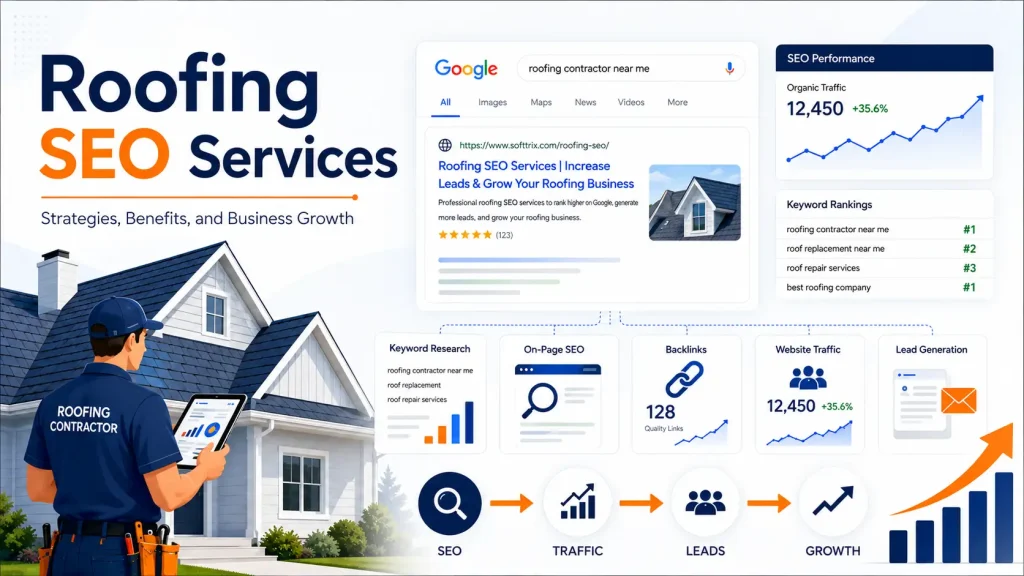
Roofing SEO helps roof companies get found in search results more often. It brings visitors who are actually looking for roofing help. Those visitors can turn into calls and form requests. It also helps your business look solid and real online. But SEO is not just about using keywords in the right spots. A good plan also covers how your site is built, what your pages say, local ranking signals, links from other sites, smart keyword choices, and routine review of results.
In my experience, many roofing firms can do quality work. Yet they do not explain their service in a clear way on the web. A strong SEO plan can help fix that. It links what you do with what people type into search boxes every day.
Next, we will go over what roofing SEO includes, how the process usually runs, what you should expect from an SEO plan, and how it can support steady growth.
What Are Roofing SEO Services?
Roofing SEO services are tactics for improving visibility on search engines. They are made for roofing contractors and roofing companies. The main aim is simple. A roofing site should show up closer to the top on searches people actually make. It should also bring in visitors who need help with roofing right now.
Here are some search terms a homeowner or business owner might type:
- roof repair near me
- emergency roof repair
- roof replacement contractor
- commercial roofing company
- roof inspection services
- storm damage roof repair
- metal roofing contractor
When your pages rank well for terms like these, new leads are more likely to find you at the right time. That is when they are ready to hire.
One thing to know: SEO is not instant. Search engines look at lots of signals before they decide what ranks higher. These signals can include site quality, how relevant the page is, how much authority the site has, how well it works on mobile, speed, location signals, the content itself, backlinks, and overall user experience.
So roofing companies should use a plan with more than one move. Relying on just one SEO tactic usually will not be enough.
Why SEO Matters for Roofing Companies
Roofing is tough in a lot of local areas. Many contractors can do the same kind of work. Because of that, getting found online matters for getting new clients.
Search engine work for roofers helps firms show up when people type in searches that signal they are ready to hire. It is not only about traffic. It is about the right kind of traffic.
Picture a homeowner typing “roof replacement contractor.” They are already dealing with a roof issue. They may be a few steps away from calling someone. If your site shows up early and answers their questions clearly, that search can turn into a call or form submission.
Free search results can also keep paying off over time. Ads bring visits, but you pay for them each time. With SEO, the content you publish can keep drawing people after the initial work is done.
This does not mean you should drop every other method. SEO can fit with Google Ads, social posts, email outreach, word of mouth, and other ways that bring in leads.
Market research also shows that many customers look up a business online before they buy. For roofing companies, that makes a solid web presence a big advantage.
What Do Roofing SEO Services Include?
A solid SEO plan usually includes multiple parts. Those parts work together, not in isolation. Because of that, companies should not treat SEO like one quick item you check off.
1. Roofing Keyword Research
Keyword research provides the foundation for an SEO campaign.
An SEO professional identifies the terms potential customers use when searching for roofing services. The research should consider search intent, competition, location, service type, and commercial value.
For example, “how long does a roof last?” has an informational intent. Someone searching “roof replacement company near me” has a much stronger commercial intent.
Both searches can be useful, but they require different content.
A roofing business can create educational content for informational searches while optimising service pages for commercial searches.
Good keyword research also identifies variations and related searches. Instead of repeatedly using one phrase, a website can naturally discuss roof repairs, roof replacement, inspections, storm damage, roofing materials, maintenance, and other relevant topics.
2. Website SEO
A website should be easy for regular visitors to use. It should also be easy for search engines to read.
Often, on page SEO just comes down to small changes. Page titles matter. Headings matter too. The web address line should be tidy. Internal links should make sense.
You also need to think about images. Captions and descriptions help. How the page content is laid out matters as well.
You want important terms in useful places. But you do not want the writing to feel forced.
Look at a roof repair page. It should say what the company does in simple words. The page should address the common questions people ask before they reach out. It should also make it quick to request a quote. Visitors should be able to contact the business without hassle.
Some SEO experts spend time on older pages. They update what is already live. They do not always build new pages from zero.
3. Technical SEO
Technical SEO is about whether search engines can reach your pages, read them, and then use that info.
Key items to check include:
- page load speed
- how well the site works on phones
- crawl access
- getting pages into the index
- XML sitemaps
- links that are dead
- how redirects are set up
- HTTPS and related security
- canonical URL tags
- structured data markup
- Core Web Vitals
A site that is set up well gives SEO a solid base.
If service pages do not get crawled or added to search results, posting more pages often will not fix the root issue.
So technical SEO should be treated as routine work, not a one-time task.
4. Local SEO
Roofing firms often rely on local visibility. Most roofing work is tied to certain towns or regions, not everywhere at once.
If you run a roofing site, your SEO plan should focus on the places you serve. You need a local strategy, not just general rankings.
Local optimization can look like this:
- Make service pages that mention real local needs and areas.
- Keep your business details accurate across major platforms.
- Get local citations from relevant sites.
- Ask for and manage customer reviews.
- Strengthen your Google Business Profile.
You should also check that your name, address, and phone number stay the same on key online directories.
That said, local SEO is not the same as copying the same page again and again. Do not flood the web with pages that only swap city names.
Search engines and customers want helpful, real details for a specific place. A good location page should spell out what you do there and share practical info that local people can use.
5. Content Marketing
Good posts still matter for SEO, even now.
A roofing website should not stop at showing what you do. It should also answer the questions people ask before they hire anyone.
You can cover topics like these:
- How often should you inspect your roof?
- How can you spot signs a roof needs to be replaced?
- Why do roof leaks show up in the first place?
- What is a typical price to replace a roof?
- What should a homeowner do right after storm damage?
- How long does a roof job usually take?
- Which roof material works best for a specific home?
Simple guides can get a reader to you sooner than you think.
Take roof leak articles as an example.
A visitor may read the page first and only book later.
If the page is easy to follow and gives real help, your company may stay on their list.
That way, a roofing business can build credibility and still gain visits from search.
6. Link Building and Online Authority
Search engines treat links as one factor for judging a site’s trust and topic fit.
A roofing company can strengthen its standing by getting links from sources that match roofing and the local area. Good targets include respected industry sites, trade magazines, local groups, business listings, supplier pages, community pages, and other legitimate places.
It helps to focus on link quality and relevance. Chasing lots of backlinks often leads nowhere, since volume alone does not prove much.
One link from a relevant local roofing page or a specific industry site can matter more than many weak links from unrelated websites. Professional seo link building services can help roofing businesses earn relevant, high-quality backlinks that strengthen website authority and support long-term search visibility.
A roofing SEO agency would usually shape a plan around where the business is located, what it offers, which competitors are visible online, and what authority the site already has.
The best route is to build real connections, share strong content, do thoughtful outreach, and aim for placements that truly fit the context.
7. Competitor Analysis
Looking at what other roofing companies do online can show you what works.
An SEO specialist can check competitor sites and note a few things:
- Which roofing services are being pushed
- Which search terms they seem to focus on
- What kinds of articles or guides they post
- How their site pages are set up
- Which cities or areas they aim at
- Where links to their pages come from
- How they connect one page to another with internal links
- What their best pages offer that visitors actually find helpful
Do not treat this as copy work. You use the findings to spot openings instead. Say a competitor has strong service pages but almost no learning content. That leaves room for your company to build better guides or resources.
Or a competitor shows up for multiple local searches.
Meanwhile, your site may not have pages that match those specific service needs.
How SEO Can Generate More Roofing Leads
Getting a higher rank does not automatically bring in more buyers.
A solid SEO plan links being seen with taking action.
For example, imagine a roofing site that brings in 1,000 free visits each month. If it only turns those visits into two enquiries, then more clicks may not fix the issue.
The site might need clearer prompts to act. It may also need better details about the service. Contact options could be easier to find. Pages may need to load faster. Proof of credibility may need to be stronger. The quote request form could be simpler.
So an SEO effort should look at the whole path from first visit to enquiry.
When someone lands on the page, they should quickly see:
- What this business handles
- Where services are offered
- Why to believe the company
- How to get in touch
- What step comes next
Items like testimonials, project images, certifications, warranties, and service details can help. Reviews and plain contact info also support trust.
Building Trust Through Roofing Content
Customers who need roofing are usually making a big money choice. They need to feel sure the contractor knows the job and can finish it right.
A business can use its website to show real know how, not just claims. For instance, rather than saying “we provide roof inspections,” it helps to spell out what an inspection actually includes.
It can also list common signs that a roof may have issues. Homeowners can then spot problems sooner. Regular checks can be explained in plain terms, so the reader sees why it matters.
When a company writes this way, the page feels more helpful. It also shows skill.
Some businesses get stuck chasing rankings. They miss that people read the page. Solid SEO should work for both sides, the search tools and the homeowner.
How to Choose a Roofing SEO Company
Picking an SEO partner takes thought and time.
If the company lists “roofing SEO” as a specialty, they should know the basics of SEO and how roof buyers move from search to contact.
Before you sign anything, ask for details on their plan. Get specifics on keyword research, technical SEO fixes, local SEO work, content plans, reporting style, and the steps they will take to build relevant, high-quality backlinks.
Also ask what “success” means to them.
A solid provider should not chase only rank numbers. Sure, rankings can help. But you should also track things that show real value, like organic traffic growth, leads that fit your services, phone calls, form fills, quote requests, conversion rates, and similar outcomes.
Be careful with promises like guaranteed first place or quick instant results. Those claims usually ignore how much changes over time.
Search results can shift because of rivals, algorithm changes, site updates, and the state of the market. A dependable provider should spell out what they can influence and explain how they will show steady progress.
How Much Do Roofing SEO Services Cost?
SEO costs can swing a lot from one business to another.
What affects the price:
- where the business is based
- how crowded the market is
- how many services are included
- the size of the website
- how strong the site already is
- how much content is needed
- any technical issues on the site
- local SEO needs
- how much link-building is required
- what the campaign is trying to achieve
A small roofing contractor focused on one town will not need the same plan as a big commercial roofing firm that works across multiple regions.
Rather than grabbing the lowest quote, it helps to weigh the likely return.
If SEO brings in leads that turn into paid roofing jobs, it can end up offering real value over time.
Still, try not to judge SEO only by what happens right away. Most of the time, it takes steady effort before a site gains enough authority and shows up clearly in search.
How Long Does Roofing SEO Take?
SEO does not feel like turning on a light for ads.
A few fixes can help quickly. That can happen when you fix site problems or when you polish pages that already get some clicks.
Other efforts take longer. If you target highly used keywords with lots of competition, you may wait for months before you see clear gains.
Most SEO tasks follow a loop. You look at what people search, adjust your site, test what works, create or revise pages, earn trust over time, then keep going with small improvements.
Your timeline depends on two main points. One is the state of your site right now. The other is how hard it is to rank for the terms you care about.
Staying with it is key. Imagine a roofing company that funds SEO for only a few months, then cuts it off. If that happens before steady progress builds, the results may fall short of what the plan could have done.
Measuring SEO Performance
Then check keyword visibility. It may change before other signals do. Read what the numbers are telling you.
After that, review impressions. Also look at clicks. Together, those usually show the real direction.
If you target a city or a nearby zone, use local stats. Rankings in a small area can change quickly.
Track calls that come from search. At the same time, review form submissions. Then review your conversion rate.
If you gather leads, sort them by fit. Stronger qualifiers often make the picture clearer.
Next, see where the leads are coming from.
Sometimes organic visits land on the wrong page. For instance, a person might reach roof repair content. Yet roof replacement pages may bring more requests.
When you spot that kind of mismatch, adjust your content. Update pages so they match the route that performs best.
When analytics is consistent, SEO can feel easier to judge. You can back up each choice with data.
Why SEO Should Be a Long-Term Strategy
Because of that, do not set up SEO one time and forget it. A steady plan can keep a roofing company working on its site. It also makes it easier to publish useful pages when you need them. Month by month, trust tends to grow with the people who find you. You can also check what other roofers share and what they rank for.
When search patterns shift, you can react fast. That way, you stay near the top where you should be.
With ongoing tweaks, the site stays in better shape as time goes on.
Final Thoughts
Roofing SEO services do not only mean adding keywords. They usually include fixing key site parts, finding the right search terms, writing and sharing useful pages, improving local rankings, speeding up the site and improving the user experience, building credibility, testing ways to get more calls or forms, and watching results over time.
For most roofing companies, the main goal is pretty clear. When someone needs a roofer, the business should show up. Just as important, the visitor should get enough helpful info to feel ready to contact the company.
SEO for roofers can help by matching searches to pages that actually answer questions. When the pages are clear and service details are strong, it becomes easier for customers to choose.
Whether a team handles SEO on its own or hires a roofing SEO agency, it helps to stick to steady methods. Quick tricks may fade fast. Lasting work tends to hold up better.
A good SEO push takes months, not days. Over time, it can bring steady organic traffic and leads that are more likely to convert. With regular updates, content that actually helps, local signals, and a site built for customers, roofing brands can stand out in their local area and compete better.
Frequently Asked Questions
1. What do roofing SEO services do?
Roofing SEO services are methods that help roofing companies show up higher on search engines. They often include keyword research, on-page SEO, technical fixes, local SEO, writing pages, earning backlinks, checking competitors, and improving how many visitors become leads.
2. Why is SEO important for a roofing firm?
SEO helps a roofing business get seen when homeowners look for help online. More visibility usually means more site visits, more form fills, more phone calls, and more requests for estimates.
3. Can a new roofing company start SEO?
Yes. A new company can begin building online presence fast. It can target nearby searches, set up clear service pages, keep its Google Business Profile updated, and publish helpful posts for local homeowners.
4. Should roofing companies prioritize local SEO?
Yes, if the work is mainly in specific towns or regions. Local SEO helps the company appear in searches that mention a location and in queries tied to service areas.
5. How frequently should a roofing site publish content?
There is no one schedule that fits all cases. Posting more will not matter if the content is thin or off-target. The better goal is to write clear, useful articles that answer real questions and match what people search for.
6. Does SEO guarantee a top ranking on page one?
No. Any real SEO firm should not promise a set position. Search rankings move all the time. They depend on competition, site quality, trust signals, the real intent behind a search, your service area, and updates from search engines.
7. Should I hire a roofing SEO agency or handle it myself?
This comes down to what you can do in house. If you already know SEO and you have time, you may take on some tasks yourself. If you do not have the right experience, or you want a fuller plan managed end to end, hiring a known SEO provider can be the better choice.
8. What should I check when choosing an SEO provider?
Focus on their experience first. Then ask how they report results and whether the numbers are easy to understand. You also want expectations that make sense, not wild promises. Good communication matters too. Make sure they explain what they will do for your business and that they know SEO well enough for your goals.
9. How do I make my roofing website better for SEO?
Begin with keyword research so you know what to target. Build service pages that actually help people. Add clear local details. Ensure the site works well on a phone and loads quickly. Use a simple menu, and link related pages together. Publish helpful content, include customer reviews, and place calls to action where visitors will see them.
10. Is SEO a good use of money for roofing companies?
It can be a smart investment when your plan targets the right searches and turns clicks into leads. The outcome depends on competition, the kind of leads you get, the size of the jobs you win, and how well your site turns visitors into customers.