
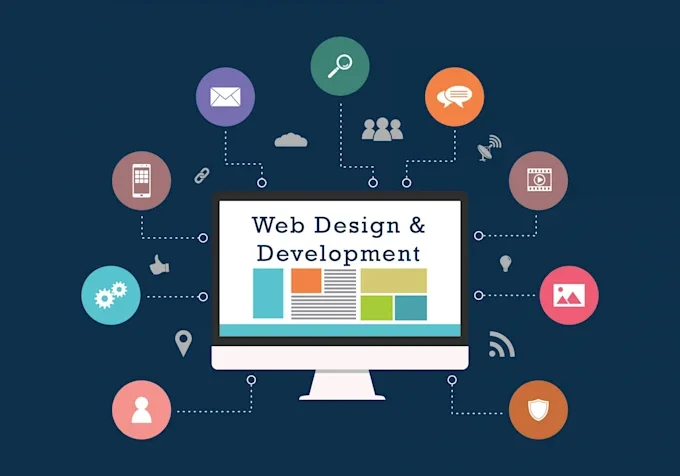
Web development services are professional solutions that help businesses plan, build, and maintain websites and web applications that attract visitors and convert them into customers.
Here’s what web development services typically include:
- Custom website design and development — building your site from scratch or on a platform like WordPress or Shopify
- Front-end development — the visual, clickable parts users see and interact with
- Back-end development — the server, database, and logic running behind the scenes
- E-commerce development — online stores with product pages, carts, and payment systems
- Web application development — dashboards, portals, and tools built for specific business workflows
- CMS development — content management systems so you can update your site without a developer
- API integration — connecting your site to third-party tools like CRMs, payment gateways, or marketing platforms
- SEO and performance optimization — making sure your site loads fast and ranks in search results
- Maintenance and support — keeping your site secure, updated, and running smoothly after launch
Table of Contents
If you’re a small business owner in California struggling to generate consistent leads online, your website is often the first place to look. A slow, outdated, or poorly built site can silently kill your conversions — even if your ads are running and your social media looks great.
One telling data point: a website redesign that supported a $200M acquisition, and another refresh that boosted user engagement by 4X — both real outcomes driven by strategic web development decisions.
The gap between a site that looks decent and one that performs is almost always invisible. It lives in the code quality, the page speed, the mobile experience, and the SEO fundamentals baked in from day one.
What Are Web Development Services and What Do They Include?
When we talk about web development services, we are referring to the comprehensive process of engineering a website’s functionality to ensure it operates smoothly, securely, and efficiently. Unlike basic template-building, professional web development offers custom solutions tailored to your specific business model. It is the engine under the hood of your digital presence.
At NK Marketing Solutions, we provide a full suite of digital Services that bridge the gap between creative design and robust engineering. Whether you need a simple landing page or a highly complex enterprise portal, professional developers construct these digital environments from the ground up.
A standard service package often includes:
- Custom Web Architecture: Designing how data flows between your users and your servers.
- Database Management: Organizing and securing customer information, product catalogs, and transaction logs.
- Third-Party Integrations: Connecting your site seamlessly with tools like Salesforce, HubSpot, or custom payment processors.
- Performance Auditing: Running deep-dive code reviews to clean up technical debt and maximize loading speeds.
For businesses looking to build structured, scalable web platforms, partnering with an experienced development team ensures that your site can handle growing traffic without crashing. Similarly, enterprise-level brands often leverage modern, secure architectures that support complex workflows and high-volume transactions.
Front-End vs. Back-End vs. Full-Stack Development
To understand how a website is built, it helps to break development down into three primary specialties:
- Front-End Development: This focuses entirely on the user interface—the visual elements that users see, click, and interact with in their browsers. Front-end developers use languages like HTML, CSS, and JavaScript, along with modern frameworks like React and Vue, to build responsive, accessible, and pixel-perfect layouts.
- Back-End Development: This is the server-side architecture that users never see. It handles the logical operations of the website, communication with databases, user authentication, and payment processing. Back-end developers write in languages such as Python, Node.js, PHP, Go, and Ruby, managing databases like PostgreSQL and MongoDB.
- Full-Stack Development: Full-stack developers are the versatile “jacks of all trades” who understand both the visible front-end design and the back-end server logic. They can build a complete web application from scratch, making them highly valuable for managing end-to-end projects.
If you want to explore how these different development layers come together to create a seamless user experience, check out our comprehensive guide on Web Development. While traditional web layers focus entirely on browser and server-side applications, companies building connected hardware or IoT products often require specialized embedded software development services to program the physical devices themselves. For businesses that prefer to scale their technical capabilities quickly without hiring full-time, in-house teams, outsourcing to a reliable agency is an excellent way to access global engineering expertise under flexible models.
Choosing the Right Web Development Services for Your Business
Every business has unique requirements. A local law firm in Granada Hills does not need the same digital infrastructure as a global e-commerce marketplace. Choosing the right development path depends on your target audience, conversion goals, and operational complexity.
- E-Commerce Platforms: Built to handle extensive product catalogs, secure payment gateways, inventory synchronization, and sudden spikes in traffic.
- Portfolios and Creative Showcases: High-impact, visually stunning websites designed to showcase projects, case studies, and photography with smooth animations and transitions.
- Blogs and Content Hubs: Optimized for rapid reading, easy content publishing, category organization, and organic search visibility.
- Landing Pages: Single-purpose, highly focused pages designed to convert traffic from PPC campaigns or social media ads into qualified leads.
Navigating these choices is part of what we call The Creative Journey: Best Web Development Service in the USA. Depending on where your business is physically located, you may want to partner with regional experts who understand local compliance standards (such as ADA/WCAG accessibility in the US or GDPR in Europe) to ensure your digital presence is fully optimized for your target market.
Core Technologies and Platforms in 2026
The web development landscape in 2026 is defined by a mix of powerful content management systems (CMS) and highly flexible custom coding frameworks.

Depending on your budget and goals, you might choose a ready-made platform or a fully custom-coded solution. To help you weigh these options, read our analysis on Custom Software vs Ready-Made: What is Better for Your Business?.
Here is a look at the most popular platforms and technologies dominating the industry today:
- WordPress: Powering a massive portion of the web, WordPress remains the king of flexibility. With the block editor (Elementor, Divi, or native Gutenberg) and advanced custom fields (ACF), it is highly customizable and excellent for SEO.
- Shopify: The gold standard for e-commerce. It provides a secure, fully hosted environment designed to scale from small boutique shops to massive multi-million dollar dropshipping and retail operations.
- Webflow: A visual CMS that allows designers to build clean, semantic HTML/CSS code without writing it manually. It is ideal for modern marketing sites that require bespoke, high-end animations.
- Squarespace: Excellent for small businesses and nonprofits looking for clean, visually appealing, and easily maintainable websites with built-in hosting.
- Custom JavaScript Frameworks (React, Next.js, Vue, Node.js): For highly interactive web applications, SaaS platforms, and customer portals, developers build custom architectures. Next.js, for example, allows for hybrid static and server-side rendering, which makes websites incredibly fast and secure.
The Role of Web Development Services in SEO and Performance
A beautiful website is useless if no one can find it. In 2026, search engines like Google place a massive premium on technical performance, specifically measuring what they call Core Web Vitals. These metrics evaluate how fast your page loads, how quickly it becomes interactive, and how visually stable the layout is during rendering.
Our approach to web development prioritizes these technical SEO factors from the very first line of code. Clean code structure, optimized database queries, image lazy loading, code-splitting, and edge caching via CDNs are not “add-ons”—they are default requirements.
When your site loads instantly, search engines reward you with higher rankings, and users stay on your site longer. To see this in action, read our guide on How a Fast Website Drives Sales and Boosts Conversion Rates in E-commerce.
Responsive Design and Mobile Optimization
With well over half of global web traffic originating from mobile devices, building a desktop-only website is no longer an option. Mobile optimization is a primary ranking factor for search engines, which crawl the mobile version of your website first.
Responsive design means your website dynamically adjusts its layout, images, and navigation menus to look and function perfectly on any screen size—from a giant desktop monitor to a compact smartphone. This seamless transition is critical for keeping users engaged and moving them smoothly down your sales funnel.
For a deeper dive into how mobile-friendly websites connect with your broader digital ecosystem, check out Mobile Apps: Modern Web Presence Connection.
The Web Development Lifecycle: From Code to Launch
Building a successful website requires a structured, disciplined approach. Professional web development agencies avoid guesswork by utilizing Agile workflows. This methodology breaks the project down into manageable, iterative phases (called sprints) with clear deliverables, keeping the project on time and within budget.
By maintaining high code quality standards, utilizing version control systems (like Git), and keeping communication open, we ensure that the transition from a design mockup to a live, functional website is completely seamless. This is a core pillar of our digital Services.
The Main Stages of a Website Development Project
Every successful website we build follows a proven, four-phase lifecycle:
- Discovery & Scoping: We map out your business goals, target audience, technical requirements, and feature integrations. This phase aligns expectations and defines the project scope.
- Wireframing & UI/UX Design: Designers create visual blueprints (wireframes) and interactive prototypes in Figma. This allows you to approve the visual layout, user journeys, and brand aesthetics before any coding begins.
- Development & Coding: Front-end developers turn the approved designs into clean, responsive code, while back-end developers build the database structures, security protocols, and API integrations.
- Testing, Launch & Maintenance: We conduct rigorous quality assurance (QA) testing across multiple browsers and devices. Once verified, we launch the site and transition into ongoing maintenance, monitoring for bugs, updating plugins, and optimizing performance.
To see some of the real-world platforms we have delivered through this process, browse our completed Projects.
Understanding Development Costs and Pricing Factors
One of the most common questions business owners ask is: “How much does a website cost?” The truth is that pricing varies wildly depending on the complexity, functionality, and scope of the project.
To give you a realistic idea of what to expect in 2026, we have compiled a comparison table outlining average costs and timelines:
| Website Type | Average Timeline | Estimated Cost Range | Best Suited For |
|---|---|---|---|
| Single-Page Landing Page | 1 – 2 Weeks | $1,500 – $3,500 | PPC campaigns, single-product launches, lead capture |
| Standard Business Website (5-10 pages) | 4 – 6 Weeks | $4,000 – $10,000 | Local service businesses, consultants, medical practices |
| E-Commerce Store (Shopify/WooCommerce) | 6 – 10 Weeks | $8,000 – $25,000+ | Retailers, online boutiques, digital product sellers |
| Custom Web Application / Portal | 8 – 16+ Weeks | $30,000 – $100,000+ | SaaS startups, customer dashboards, internal tools |
Several factors influence where your project will fall on this pricing spectrum:
- Custom vs. Template: Building a bespoke site from scratch requires more development hours than customizing a pre-made WordPress or Squarespace template.
- API and Third-Party Integrations: Connecting your site to legacy databases, custom CRMs, or complex ERP systems adds development complexity.
- Content Migration: Migrating hundreds of blog posts, product pages, and customer records from an old site to a new one requires careful planning to preserve your SEO rankings.
If you are ready to get an accurate, tailormade quote for your business, visit our dedicated Web Development page to speak with our specialists.
What Does a Website Developer Do?
A professional web developer does far more than just write code. They act as technical architects who ensure your digital storefront is secure, fast, and scalable.
Their day-to-day responsibilities include:
- Writing Clean, Maintainable Code: Following W3C guidelines and industry best practices so other developers can easily update the site in the future.
- Implementing Robust Security: Installing SSL certificates, configuring firewalls, setting up secure user authentication, and validating forms to protect against SQL injections and data breaches.
- API Integration: Connecting external software systems to sync data automatically (e.g., sending lead form submissions directly to your CRM).
- Technical Support and Optimization: Debugging errors, conducting regular database cleanups, and ensuring the hosting server is configured for maximum uptime.
Frequently Asked Questions About Web Development
How long does it take to build a custom website in 2026?
The timeline depends heavily on the project’s complexity. A standard informational business website typically takes 4 to 6 weeks from discovery to launch. A highly customized e-commerce platform or a custom web app (Minimum Viable Product – MVP) can take 8 to 16 weeks or more. The timeline is split between design feedback loops, coding, testing, and final deployment.
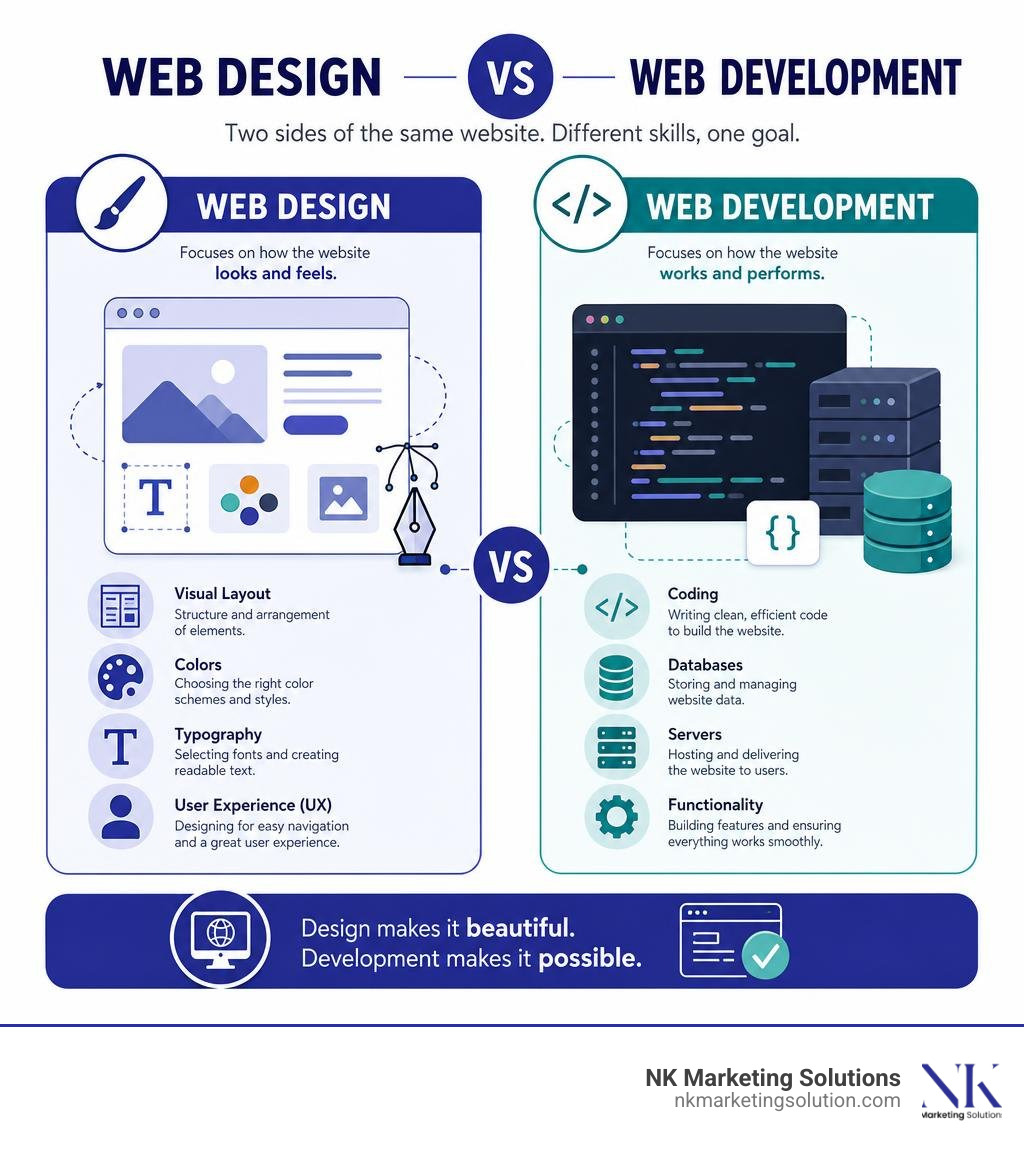
What is the difference between web design and web development?
Web design is about visual aesthetics and user experience (UI/UX). Designers focus on color palettes, typography, layout structures, and how intuitive the site feels to navigate. Web development is about functional architecture and coding. Developers take those static designs and write the HTML, CSS, JavaScript, and back-end logic required to make the website actually work.
To learn more about maximizing your visual brand for growth, read our guide on the Best Website Design Company California for Business Growth.
How do I choose between a freelancer and a web development agency?
Freelancers can be cost-effective for small, straightforward projects (like a simple blog or basic landing page). However, they often specialize in only one area (e.g., front-end design) and may lack the bandwidth for ongoing support.
A full-service web development agency provides a complete team—including project managers, designers, front-end and back-end developers, and SEO specialists. This ensures your project is handled professionally from every angle, with long-term maintenance and growth strategies in place. If you are looking to drive organic traffic to your new site immediately after launch, combining development with professional SEO Services is highly recommended.
Conclusion
Your website is the digital foundation of your business. In 2026, simply having an online presence is not enough—your site must be fast, mobile-friendly, secure, and built to convert casual visitors into loyal customers.

At NK Marketing Solutions, we are a premier digital marketing agency in California, serving businesses across California, Texas, Florida, and New York. We specialize in providing affordable, results-driven campaigns with zero long-term contracts. Whether you need custom Web Development, cutting-edge SEO, high-converting PPC campaigns, social media management, or email marketing, our expert team is here to help your small business grow.
Ready to build a high-performance website that drives measurable results? Contact us today to discuss your project and get a custom quote!