

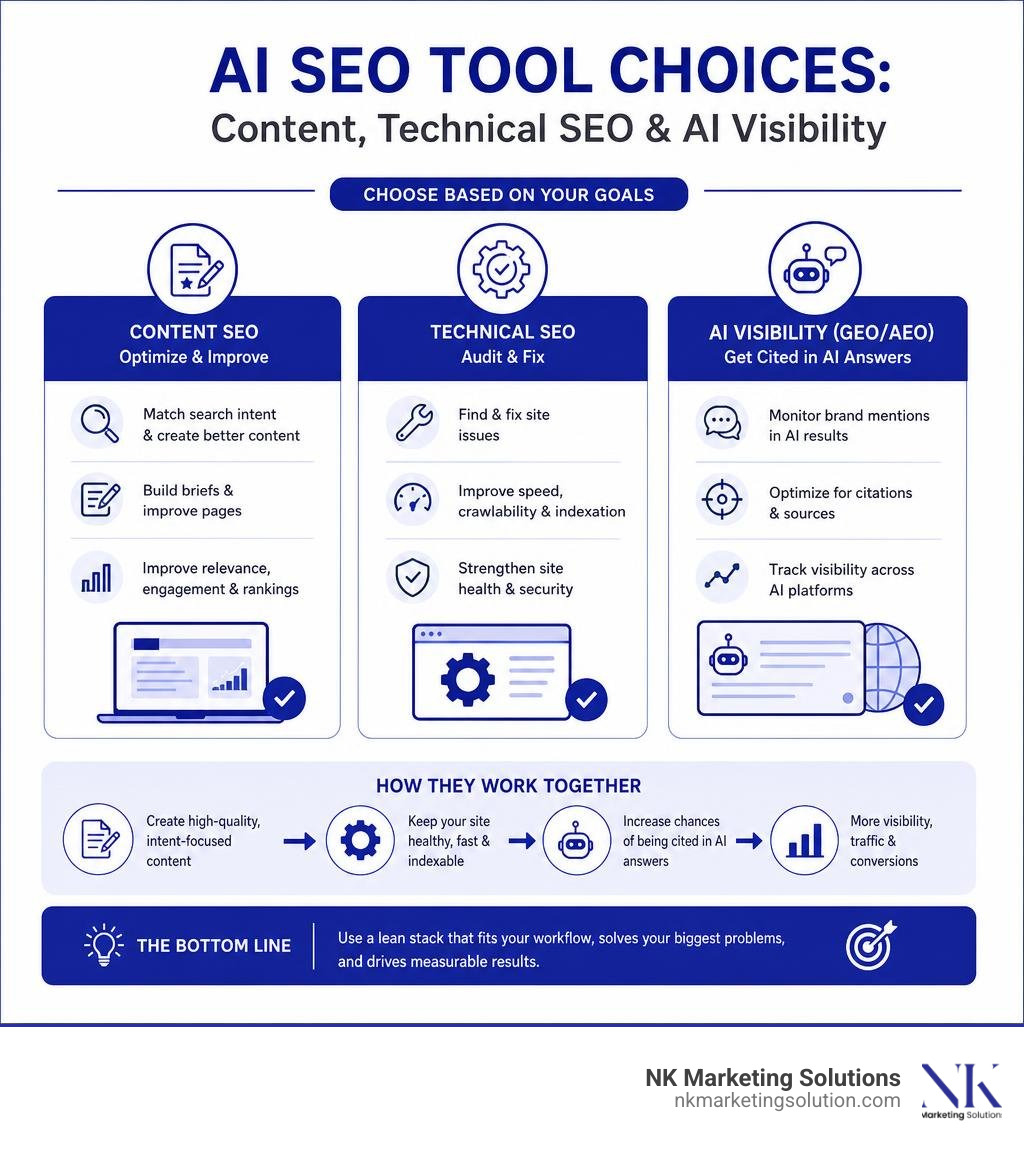
The best AI for SEO is rarely one tool that does everything. For most small businesses, the smart choice is a lean stack: use an AI content optimizer for search intent and page improvements, a trusted SEO platform for rankings and technical issues, and an AI visibility tool only if customers are likely to discover you through Google AI Overviews, ChatGPT, Gemini, or Perplexity.
Prioritize tools that can help you:
- Match the intent behind real search results.
- Create useful briefs and improve existing pages.
- Find technical problems that block rankings.
- Measure traffic, leads, rankings, and AI-search citations.
- Fit your budget and current website workflow.
That last point matters. In 2026, an estimated 60-68% of U.S. Google searches end without an external click. Visibility now includes being ranked, summarized, and cited in AI-generated answers. But paying for five overlapping AI subscriptions will not solve that problem.
This guide compares practical AI SEO options for content, technical audits, agency workflows, and generative engine optimization (GEO). The goal is simple: invest in the few capabilities that can produce measurable gains, then keep a human responsible for strategy, facts, customer insight, and final approval.
How AI is Transforming Traditional SEO into GEO and AEO
Search engine optimization is no longer just about ten blue links. Modern search relies heavily on Generative Engine Optimization (GEO) and Answer Engine Optimization (AEO). When prospective customers ask complex questions, conversational engines synthesize direct summaries before a user ever reaches an organic search snippet.
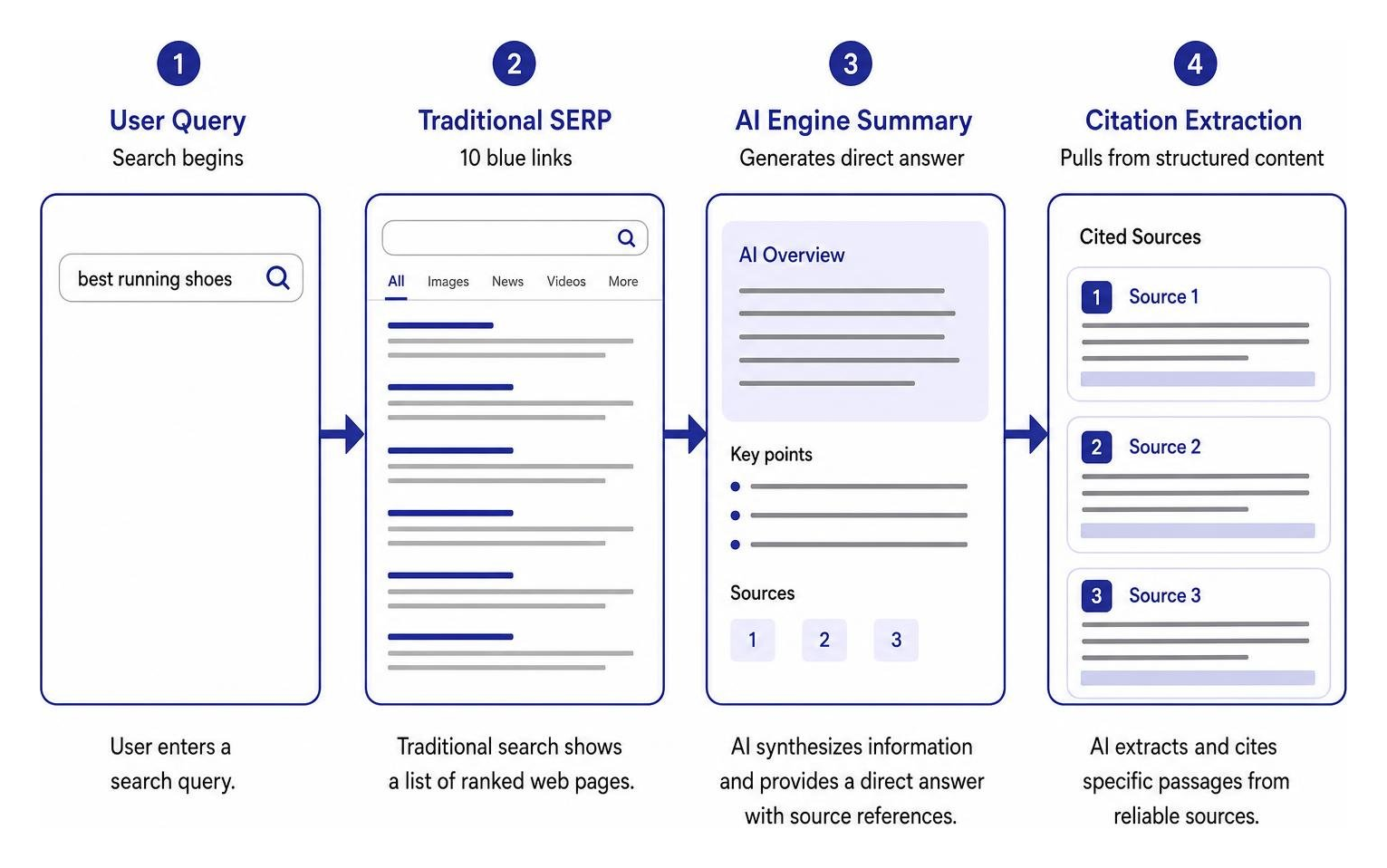
This evolution means algorithms evaluate your site based on direct entity relationships, structured data, and passage citability. If an AI engine cannot easily lift a clear, factual answer block from your page, it will cite a competitor instead.
Building a future-proof content strategy means structuring your writing so both traditional crawlers and large language models (LLMs) can instantly parse your core message.
Evaluating the Best AI for SEO Content and Briefs
When evaluating platforms for content creation and optimization, look beyond raw text generation. A tool that spews out 3,000 generic words in thirty seconds often creates more editorial clean-up than value. The real leverage comes from automated SERP intent analysis, entity extraction, and structured outline generation.
Effective content tools analyze top-ranking competitors in real time to highlight:
- Missing semantic topics and entity gaps.
- Common questions asked by real searchers.
- Recommended word counts, header structures, and reading levels.
- Natural internal linking paths across existing articles.
Selecting the right AI content platforms allows your marketing team to draft data-backed briefs in minutes rather than hours. When paired with dedicated keyword research tools, these systems ensure every piece of content targets verified search volume and user intent.
Optimizing for AI Overviews and Multi-Platform Citations
Appearing inside Google AI Overviews, Perplexity spaces, and ChatGPT search summaries requires a deliberate approach to formatting. Research indicates that the optimal passage size for AI citability sits between 134 and 167 words. These self-contained answer blocks provide direct definitions or solutions immediately below descriptive, question-based H2 or H3 headings.
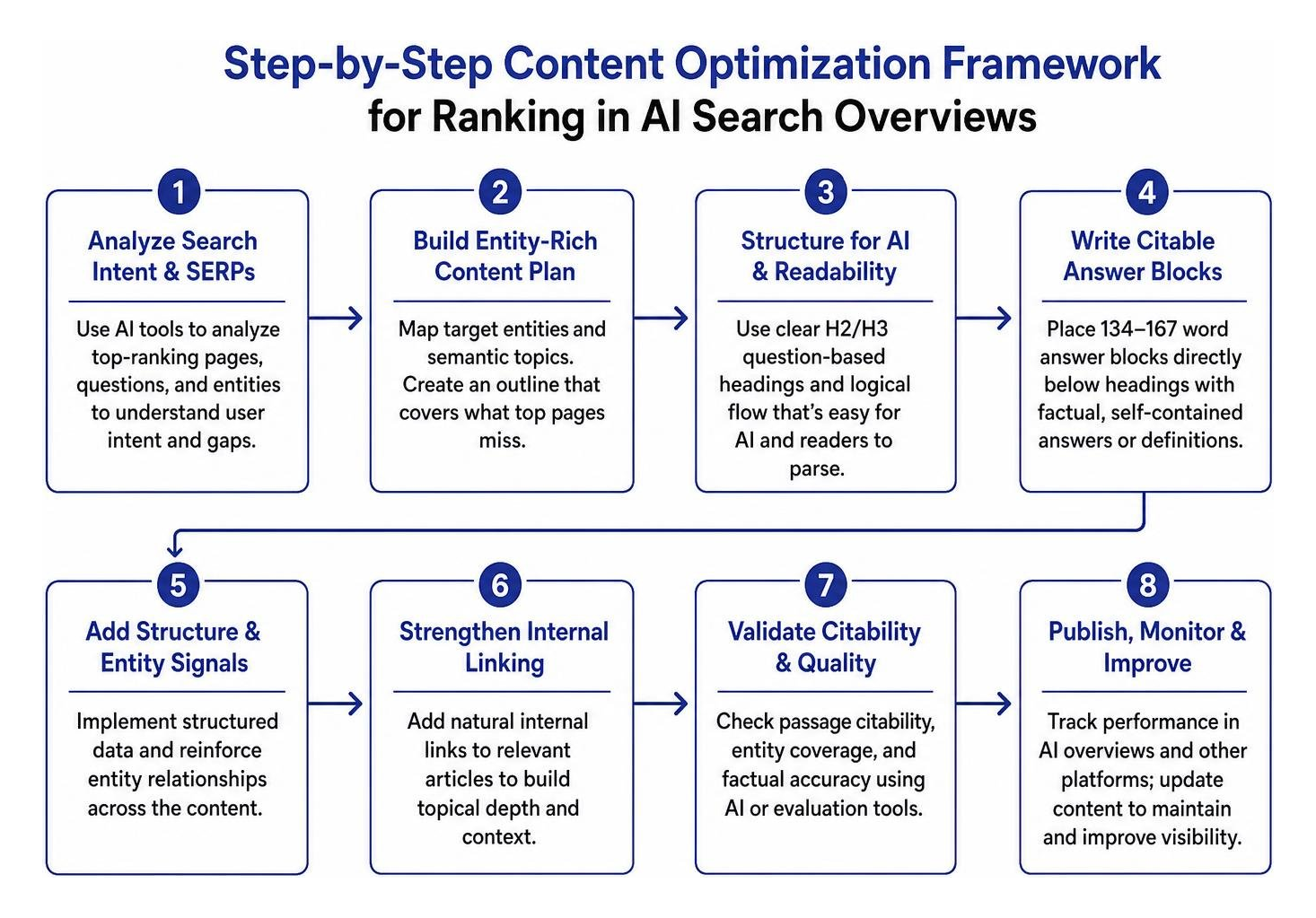
Developers and technical marketers are increasingly using open-source repositories like the open-source Claude SEO repository to evaluate how well their pages score on passage citability, structured data, and entity grounding.
If your rankings drop despite publishing regularly, take time for diagnosing why your site is not ranking to uncover hidden technical roadblocks, thin content, or missing entity context.
Key Framework for Selecting the Best AI for SEO
Selecting software without a structured framework is the fastest way to drain your marketing budget on unused dashboard seats. We evaluate AI tools using four practical pillars:
- Workflow Integration: Does the tool connect smoothly with your CMS, Google Search Console, or coding environment? A tool that forces endless copy-pasting between disparate browser tabs quickly creates operational bottlenecks.
- Intent Accuracy: Does it analyze live, real-time search engine result pages (SERPs) rather than outdated static training data? Search algorithms evolve continuously, and historical data alone cannot reflect current ranking requirements.
- Actionable Recommendations: Does it provide falsifiable diagnostic steps with clear success indicators, or just vague scores? Effective platforms specify exact technical remedies, structural improvements, and content additions.
- Total Cost of Ownership: Are you paying for redundant features that duplicate software you already own? Many platforms bundle costly bells and whistles that provide little incremental business value.
Leveraging AI marketing automation should simplify your operations, not add unnecessary complexity to your daily routine.

Open-Source Agents vs SaaS: Finding the Best AI for SEO Workflows
One of the biggest shifts in modern SEO is the choice between proprietary SaaS platforms and open-source, agentic AI pipelines.
Commercial SaaS platforms provide polished, user-friendly graphical interfaces that require zero technical setup. They work wonderfully for non-technical writers who want real-time scoring sliders inside an editorial workspace.
Open-source, terminal-based tools leverage Model Context Protocol (MCP) and multi-agent execution directly inside developer environments like Claude Code or Cursor. For instance, the DispatchSEO automation pipeline allows developers to build scheduled, pull-request-driven content workflows connected to GitHub and Google Search Console.
Similarly, the Codex SEO agent suite orchestrates parallel specialist sub-agents to conduct deep technical audits, track Core Web Vitals (such as INP, LCP, and CLS), and monitor SEO drift across website deployments.
Using an AI agent for SEO content creation gives engineering and marketing teams the flexibility to build automated pipelines at a fraction of enterprise SaaS subscription fees.
Essential Evaluation Criteria and Feature Checklist
Before adding another subscription to your credit card, review this comparison between open-source agent environments and commercial SaaS suites:
| Feature / Capability | Open-Source AI Agents (CLI/MCP) | Commercial SaaS Platforms |
|---|---|---|
| Setup & Maintenance | Requires technical setup (Docker, CLI, API keys) | Instant browser login; plug-and-play UI |
| Data Privacy | High; runs locally or on your own VPS | Data processed through third-party servers |
| Audit Speed | High; parallel agents complete audits in minutes | Moderate; constrained by standard web crawlers |
| Software Cost | $0 base software cost (pay only for model tokens) | $99 to $1,000+ per month subscription fees |
| Drift & Regression Monitoring | Automated baselines via Git or CI/CD pipelines | Manual re-crawling or static change alerts |
| Best For | Technical teams, developers, power users | Non-technical writers, editors, busy teams |
The 80/20 Rule: Balancing Automated Intelligence with Human Expertise
The 80/20 rule of AI-driven SEO is simple: automated systems should handle the 80% of repetitive, analytical tasks—such as initial keyword clustering, SERP outline building, schema generation, and code error audits.
The remaining 20% must come from human expertise, strategic positioning, case studies, and brand voice refinement. When applied effectively, this operational division allows marketing teams to spend less time on routine data gathering and more time on high-leverage strategic initiatives.
Relying entirely on autonomous generation without editorial review is dangerous. Large language models can hallucinate facts, fabricate statistics, or produce repetitive text patterns that search engine quality raters identify as unhelpful. Without human oversight, automated systems can easily overlook nuanced brand messaging and misinterpret user intent.
Google places its heaviest E-E-A-T emphasis on Trustworthiness. Human editors ensure your content includes verified customer testimonials, original research, accurate technical guidance, and unique industry perspectives that software cannot replicate. By combining algorithmic speed with human discernment, businesses build sustainable organic visibility that withstands core algorithm updates.
Frequently Asked Questions about AI SEO Tools
Can AI SEO tools completely replace human SEO specialists?
No. AI tools excel at accelerating research, spotting technical anomalies, and drafting structural outlines, but they lack real-world business context and strategic judgment. They cannot conduct customer interviews, assess offline conversion value, or understand nuanced brand positioning. The most effective campaigns use AI to increase the speed and precision of experienced marketers who guide overall campaign direction and validate technical execution.
How do AI tools track brand citations across ChatGPT and Perplexity?
Modern visibility tools query conversational models against vast databases of conversational search prompts. They analyze which domains are cited as sources, evaluate your brand’s share of voice within generated answers, and track whether your key product features are accurately represented in AI-synthesized responses. These platforms also monitor longitudinal sentiment and citation frequency across different conversational search queries.
What is the most cost-effective way to implement AI in SEO workflows?
Start with a hybrid approach. Use cost-effective or open-source API workflows for heavy lifting like keyword clustering, search intent analysis, and initial draft outlines. Then, invest your budget into human editorial review, original media assets, and authoritative digital PR. This avoids high monthly software seat costs while producing superior content quality that ranks consistently in competitive search landscapes.
Conclusion
Finding the right balance of AI tools is about improving workflow efficiency without getting distracted by flashy features you will never use. Focus your budget on platforms that solve your specific operational bottlenecks—whether that means speeding up your content brief production, automating technical schema validation, or tracking visibility in conversational search summaries.
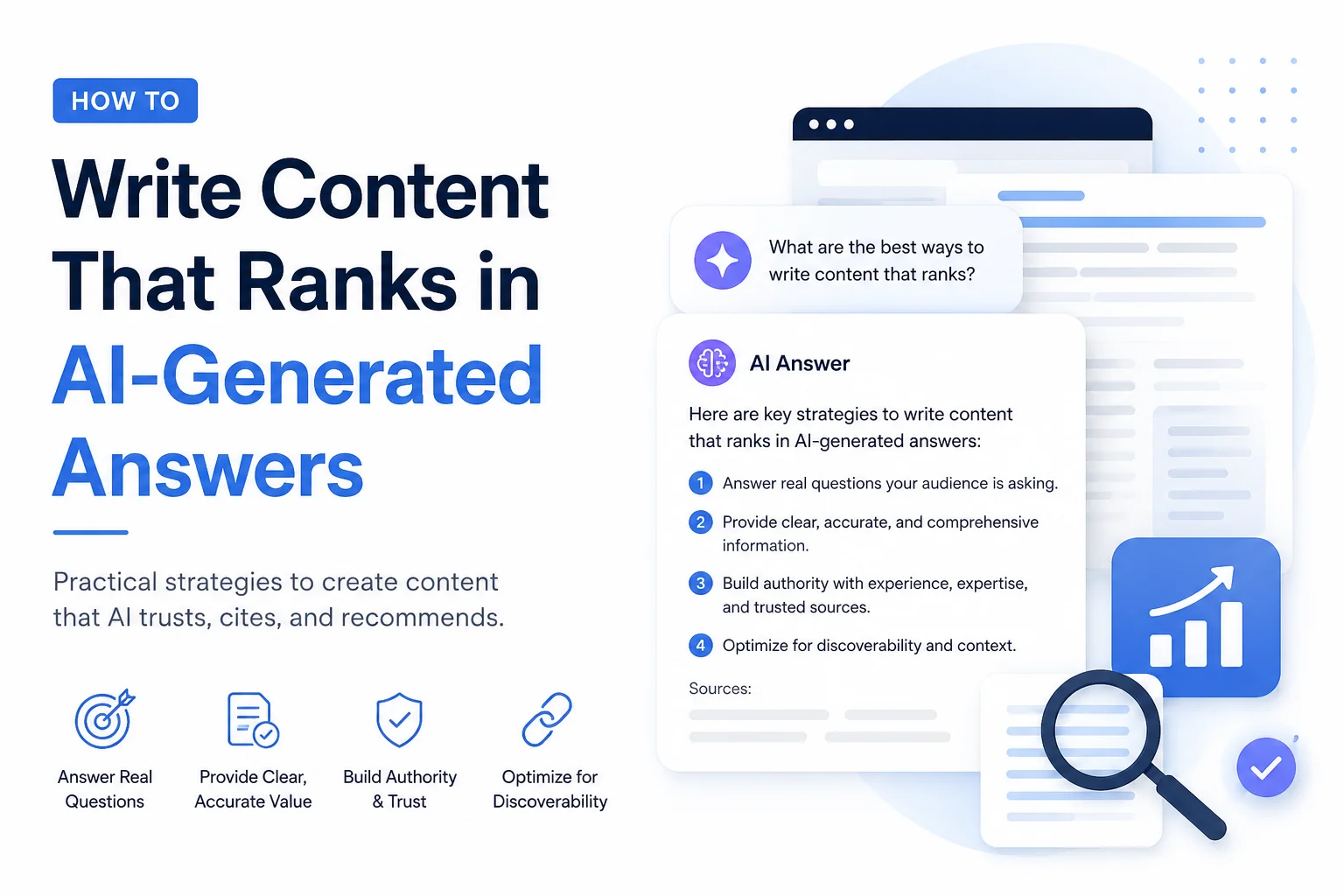
At NK Marketing Solutions, we help small businesses build affordable, data-driven SEO campaigns with transparent reporting and no long-term contracts. Learn the foundational steps for writing content that ranks in AI-generated answers to ensure your website captures traffic across both classic search results and modern generative platforms.